


The Best Countries to Discover World Cuisine
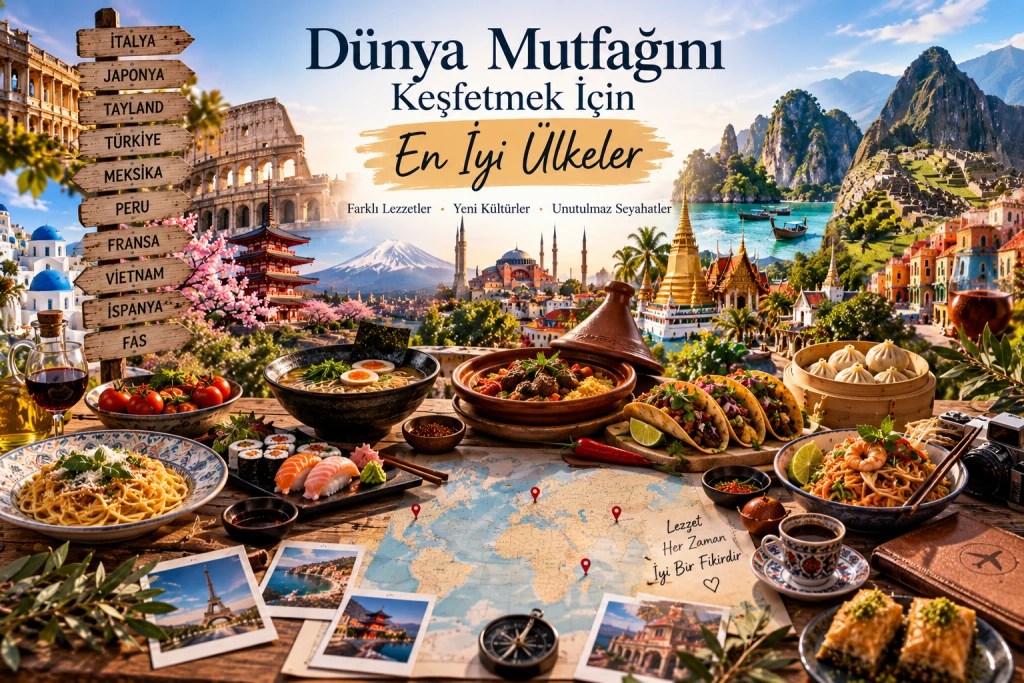
Best Countries to Explore World Cuisine
One of the most enjoyable ways to get to know a country is by exploring its cuisine. Because food is not just about satisfying hunger; it also provides important clues about history, culture, geography, traditions, and daily life.
Eating fresh pasta in Italy, experiencing authentic sushi in Japan, exploring street markets in Thailand, trying taco culture in Mexico, or chasing regional flavors in Turkey can turn a trip into something far more special than an ordinary vacation.
Today, gastronomy has become a significant motivator in travel decisions. UNESCO does not view gastronomy as merely about food; it emphasizes that preparation, production, and consumption methods passed down from generation to generation are part of cultural heritage.
So, which countries should you visit to explore world cuisine? Here are countries that stand out with their diverse culinary cultures, local dishes, street flavors, and gastronomic experiences.
Top 15 Countries to Explore World Cuisine
When it comes to world cuisine, it is impossible to select a single country as the "best." Every country has its own unique ingredients, cooking techniques, and gastronomic culture.
However, the following countries stand out particularly for both the richness of their traditional cuisines and their appeal in gastronomy tourism:
1. Italy: A Cuisine Beyond Pizza and Pasta
Italy is one of the first stops for those who want to explore world cuisine.
But thinking of Italian cuisine only as pizza and pasta would be a big mistake. From north to south, the country features very different food cultures in various regions.
Must-tries in Italy
- Napoleitan Pizza
- Pasta
- Risotto
- Lasagna
- Gnocchi
- Parmigiano Reggiano
- Gelato
- Tiramisu
- Arancini
Which cities to visit for gastronomy?
Naples: Pizza
Bologna: Fresh pasta and ragù
Rome: Carbonara and cacio e pepe
Florence: Bistecca alla Fiorentina
Milan: Risotto alla Milanese
Sicily: Seafood, arancini, and cannoli
A gastronomy tour covering different regions of Italy offers a much richer experience than visiting just one city.
2. Japan: Where Traditional and Modern Gastronomy Meet
Japan hosts some of the most refined examples of world cuisine.
While sushi, ramen, and tempura are known worldwide, Japanese cuisine contains much more than these.
What to eat in Japan?
- Sushi
- Sashimi
- Ramen
- Tempura
- Yakitori
- Okonomiyaki
- Takoyaki
- Udon
- Wagyu
- Matcha desserts
Tokyo, Osaka, and Kyoto are among the most important cities to explore different Japanese food cultures.
In particular, Tokyo stands out as one of the world's most concentrated centers of Michelin-starred gastronomy. In National Geographic's 2026 gastronomy selection, Tokyo and Japan are also evaluated as key centers of world cuisine.
3. Thailand: The Kingdom of Street Food
Thailand is one of Asia's strongest destinations when it comes to gastronomy tourism.
In Thai cuisine, sweet, sour, spicy, and salty flavors can meet on the same plate.
Must-eats in Thailand
- Pad Thai
- Tom Yum
- Green Curry
- Massaman Curry
- Som Tam
- Mango Sticky Rice
- Pad Kra Pao
- Thai Coconut Soup
Local markets and street foods are important parts of the gastronomic experience in cities like Bangkok, Chiang Mai, Phuket, and Ayutthaya.
Bangkok was ranked first in Time Out's 2026 survey of Asia's best food cities.
4. Mexico: From Taco Culture to Mole
Mexican cuisine is one of the most characteristic cuisines in the world.
Corn, beans, peppers, avocado, and various spices form the foundation of Mexican food culture.
What to eat in Mexico?
- Tacos al Pastor
- Guacamole
- Mole
- Tamales
- Enchiladas
- Quesadillas
- Chiles en Nogada
- Elote
- Churros
In particular, Mexico City, Oaxaca, Puebla, and Guadalajara are standout routes for those wanting to explore Mexican gastronomy.
5. France: One of the World's Most Famous Gastronomic Cultures
France is one of the world's strongest countries when it comes to gastronomy.
French cuisine is highly developed in terms of technique, presentation, quality ingredients, and regional diversity.
Must-tries in France
- Croissant
- Baguette
- Crêpe
- Ratatouille
- Coq au Vin
- Bouillabaisse
- Escargot
- Crème Brûlée
- Macaron
Gastronomy route
Paris → Lyon → Bordeaux → Provence → Nice
This route could be a very strong option for those who want to discover different faces of French cuisine.
6. Spain: Tapas, Paella, and Mediterranean Flavors
Spain is one of the countries where meals are not just served but are an important part of social life.
In particular, the tapas culture makes it easy to make gastronomic discoveries by trying different dishes in small portions.
What to eat in Spain?
- Paella
- Tapas
- Tortilla Española
- Jamón Ibérico
- Gazpacho
- Churros
- Patatas Bravas
- Pulpo a la Gallega
Barcelona, Madrid, Valencia, San Sebastián, and Seville are cities that stand out in terms of gastronomy.
7. Turkey: Thousands of Years of Anatolian Culinary Culture
Turkey is one of the countries where the culinary cultures of different geographies and civilizations meet.
The food culture shows serious differences from the Black Sea to the Aegean, from Southeastern Anatolia to the Mediterranean.
In UNESCO's Creative Cities Network, Gaziantep, Hatay, and Afyonkarahisar from Turkey are included in the gastronomy category, while Şanlıurfa is also among the cities included in the UNESCO network in the field of gastronomy. There are many Turkish cities in UNESCO's current list of creative cities in the field of gastronomy.
Must-tries in Turkey
- Gaziantep baklava
- Kebab varieties
- Lahmacun
- İskender
- Mantı
- Meze
- Olive oil-based dishes
- Black Sea pide
- Cağ kebab
- Künefe
- Turkish coffee
Gastronomy route in Turkey
Gaziantep → Şanlıurfa → Hatay → Mardin → Adana → İzmir → Urla → Istanbul
Turkey is one of the most advantageous countries in the world for those who want to experience very different culinary cultures in a single trip.
8. India: The Land of Spices and Regional Cuisines
Indian cuisine is one of the most diverse food cultures in the world.
In the country, ingredients, spices, and cooking techniques change significantly from north to south.
What to eat in India?
- Biryani
- Butter Chicken
- Tikka Masala
- Dosa
- Samosa
- Naan
- Chole Bhature
- Vindaloo
- Masala Chai
Delhi, Mumbai, Jaipur, Lucknow, and Hyderabad are particularly noteworthy in terms of gastronomy.
National Geographic highlights Lucknow among the standout destinations in its 2026 gastronomy selection. The city was included in the UNESCO Creative Cities Network in the field of gastronomy at the end of 2025.
9. China: One of the World's Most Diverse Cuisines
Evaluating Chinese cuisine as a single cuisine is actually quite difficult.
Regional cuisines such as Sichuan, Cantonese, Hunan, Shandong, and Beijing have very different characteristics from each other.
What to eat in China?
- Dim Sum
- Peking Duck
- Dumpling
- Chow Mein
- Hot Pot
- Mapo Tofu
- Xiaolongbao
- Jianbing
Beijing, Shanghai, Chengdu, Guangzhou, and Xi'an are cities that stand out in terms of gastronomy.
In particular, Chengdu is an important stop for those who want to experience the spicy Sichuan cuisine.
10. Vietnam: Light, Fresh, and Aromatic Flavors
Vietnamese cuisine stands out with the balanced use of fresh herbs, rice, vegetables, and aromatic sauces.
What to eat in Vietnam?
- Pho
- Banh Mi
- Bun Cha
- Bun Thit Nuong
- Goi Cuon
- Cao Lau
- Egg Coffee
Hanoi and Ho Chi Minh City are among the best starting points to explore Vietnamese cuisine.
Ho Chi Minh City ranked first in Time Out's 2026 survey of the world's best street food cities.
11. Peru: The Gastronomic Star of South America
Peru has gained a very strong position on the world gastronomy scene in recent years.
Peruvian cuisine brings together indigenous Andean culture, Spanish influence, Asian migrations, and seafood from the Pacific coast.
What to eat in Peru?
- Ceviche
- Lomo Saltado
- Anticuchos
- Ají de Gallina
- Causa
- Pachamanca
Lima is one of the most important cities for those who want to explore Peruvian gastronomy.
12. South Korea: The Land of Fermented Flavors and Korean BBQ
South Korean cuisine is gaining more attention globally in recent years.
Kimchi, fermented products, rice, vegetables, and strong sauces are among the fundamental elements of Korean food culture.
What to eat in South Korea?
- Kimchi
- Bibimbap
- Korean BBQ
- Tteokbokki
- Bulgogi
- Japchae
- Kimchi Jjigae
- Korean Fried Chicken
Seoul is an ideal destination for experiencing both traditional Korean cuisine and modern gastronomy culture in the same city.
13. Greece: The Simple and Delicious Face of Mediterranean Cuisine
Greece has some of the finest examples of Aegean and Mediterranean cuisine.
Olive oil, fresh vegetables, seafood, cheeses, and herbs form the foundation of the cuisine.
What to eat in Greece?
- Souvlaki
- Moussaka
- Greek Salad
- Tzatziki
- Feta
- Spanakopita
- Gyros
- Baklava
- Loukoumades
Athens, Thessaloniki, Crete, Santorini, and Rhodes can be considered for gastronomy-focused trips.
14. Morocco: The Culinary Culture of Spices and Markets
Moroccan cuisine is one of the most impressive food cultures in North Africa.
Cinnamon, saffron, cumin, ginger, and various spices create characteristic aromas in dishes.
What to eat in Morocco?
- Tajine
- Couscous
- Pastilla
- Harira
- Msemmen
- Mint Tea
- Brochette
Marrakech, Fes, and Casablanca are cities that stand out for exploring Moroccan cuisine.
15. Portugal: Seafood and Atlantic Cuisine
Portuguese cuisine stands out especially with its seafood and simple cooking techniques.
What to eat in Portugal?
- Bacalhau
- Pastel de Nata
- Francesinha
- Sardines
- Caldo Verde
- Polvo
- Bifana
Lisbon and Porto are ideal starting points for a gastronomy-focused trip to Portugal.
How to Choose a Country to Explore World Cuisine?
When planning a gastronomy tour, you should consider your travel style rather than just asking "whose food is delicious?"
If you love street food
Thailand, Vietnam, Mexico, India, and Malaysia are good options.
If you want a fine dining experience
France, Japan, Italy, and Spain stand out.
If you love seafood
Portugal, Japan, Greece, Spain, and Peru can be considered.
If you love spicy food
India, Thailand, Mexico, and South Korea are more suitable options.
If you love Mediterranean cuisine
Turkey, Italy, Greece, and Spain are strong alternatives.
If you want to experience different cultures in the same trip
Turkey, Malaysia, Singapore, Mexico, and Peru are notable for cultural diversity.
What to Consider When Planning a Gastronomy Tour?
When planning a trip to explore world cuisine, listing restaurants alone is not enough.
1. Research local markets
To see the real face of gastronomy, local markets and traditional bazaars are very valuable.
2. Make time for street food
In particular, in Asia and Latin America, street foods make up an important part of the local cuisine.
3. Prefer regional dishes
Instead of international chains, try only dishes specific to that region.
4. Research meal times
In some countries, certain dishes are prepared only in the morning or evening hours.
5. Take advantage of gastronomy tours
Food tours with local guides can help you discover more flavors in a short time, especially in cities you are visiting for the first time.
6. Plan restaurants requiring reservations in advance
Reservations may be required in advance, especially during peak seasons, at Michelin-starred or popular restaurants.
Which Are the Top 5 Countries for Gastronomy Tourism?
If you need to choose only five countries, the following routes can form a strong start:
1. Italy
Pizza, pasta, cheese, wine, and regional cuisine diversity.
2. Japan
Sushi, ramen, wagyu, and traditional Japanese cuisine.
3. Thailand
Street food, night markets, and strong spice culture.
4. Mexico
Tacos, mole, corn-based dishes, and rich local cuisine.
5. Turkey
A very wide variety of dishes coming from different regions of Anatolia.
These five countries are a very good starting point for those who want to experience completely different gastronomic cultures.
The Tastiest Way to Know a Country
Exploring world cuisine does not mean just tasting different foods. It also means getting to know the history, traditions, production methods, and lifestyles of different societies.
UNESCO also states that traditional practices related to gastronomy are an important part of cultural heritage. The fact that there are many cities in UNESCO's Creative Cities Network in the field of gastronomy today also shows the importance of cuisine in the cultural identity of cities.
In 2026, cities from different geographies such as Crete, Prague, Lucknow, and Singapore also stand out among destinations worth noting for gastronomy travel. National Geographic's 2026 selection highlights Crete's Mediterranean cuisine, Lucknow's palace cuisine tradition, and Singapore's hawker and Peranakan food culture.
Therefore, plan your next holiday not just with the question "Where will I go?" but also with the question "What will I eat there?"
Because sometimes what reminds you of a country is not a landscape you saw, but that unique dish you tasted during your trip.