


How to Make a Vacation Budget?
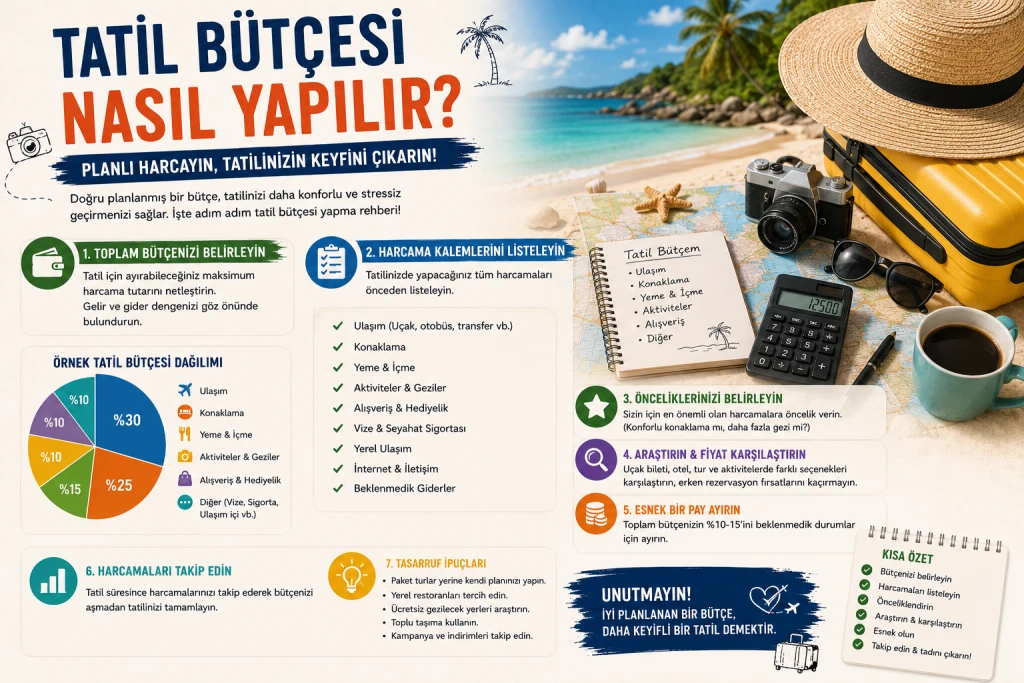
How to Create a Vacation Budget? Step-by-Step Vacation Plan
Planning a vacation is exciting, but creating the right budget is one of the most important stages of a trip. Calculating flight and hotel prices alone is not enough. Transportation, food, activities, shopping, insurance, and unexpected expenses should also be included in the total vacation cost.
So, how do you prepare a vacation budget? How much money should you set aside for a vacation? Which expenses should be calculated in advance for an affordable vacation?
In this guide, we explain the step-by-step method for preparing a vacation budget so that you can organize your vacation in a more planned and controlled way.
Why Is a Vacation Budget Important?
A well-prepared vacation budget allows you to see in advance how much you can spend during your trip.
The main advantages of creating a budget are:
- It reduces unnecessary expenses.
- It prevents you from experiencing financial stress during your vacation.
- It makes it easier to identify suitable hotel and transportation options.
- It allows you to plan the duration of your vacation according to your budget.
- It helps you be prepared for unexpected expenses.
- It enables you to make better reservation decisions.
In short, a good vacation budget helps make your vacation more enjoyable.
1. First, Determine Your Total Vacation Budget
Instead of starting your vacation plan by looking at hotels or flights, determine your total budget first.
For example:
Total vacation budget: 50,000 TL
Rather than allocating the entire budget to accommodation, you should divide it among different expense categories.
A simple distribution could be:
- Transportation: 25%
- Accommodation: 30%
- Food and beverages: 20%
- Activities: 10%
- Shopping: 5%
- Emergency reserve: 10%
These percentages are not fixed. They may vary depending on the type of trip.
2. Determine the Duration of Your Vacation
One of the most important factors affecting your budget is the duration of your trip.
The budget for a 3-day vacation will naturally not be the same as that for a 10-day vacation.
First, determine:
- How many days you will stay
- How many nights you will spend in accommodation
- Your travel dates
Then you can calculate your average daily spending limit.
3. Calculate the Number of People
The number of people joining the vacation directly affects the total cost.
Different budget plans are needed especially for:
- Couples
- Families with children
- Groups of friends
- Large families
For example, in a family of four, flight, transfer, and activity costs may increase according to the number of people. However, some hotels or tour packages may offer special price advantages for families.
4. Calculate Transportation Costs
Transportation can make up a significant portion of a vacation budget.
Consider the following together:
- Flight tickets
- Bus tickets
- Train tickets
- Ferry
- Airport transfer
- City transportation
- Car rental
- Fuel
- Parking
Especially when traveling abroad, looking only at the flight ticket is not enough.
Add the cost of transportation from the airport to the hotel and within the city to your budget.
5. Look at the Total Price When Buying Flight Tickets
When you think you have found an affordable flight ticket, do not overlook additional fees.
The ticket price may not include additional costs such as:
- Baggage
- Seat selection
- Food
- Ticket changes
- Airport transfer
Therefore, compare the total travel cost rather than the advertised ticket price.
6. Determine Your Accommodation Budget
Accommodation is generally one of the largest expense categories in a vacation budget.
When evaluating accommodation options, you can compare:
- Hotels
- Apartments
- Villas
- Boutique hotels
- Hostels
- Resorts
However, do not evaluate only the nightly price.
For example, a hotel that includes breakfast may be more advantageous overall than a property that appears cheaper but does not offer breakfast.
7. Take the Hotel’s Location into Account
Finding a cheap hotel does not always mean that you are saving money.
When staying at a hotel far from the city center, you may need to use the following every day:
- Metro
- Bus
- Taxi
- Transfer
For this reason, calculate the daily transportation cost along with the hotel price.
Sometimes a slightly more central hotel may be more advantageous in terms of the total vacation budget.
8. Create a Food and Beverage Budget
Food expenses can grow unnoticed during a vacation.
Set an average daily budget.
For example:
Breakfast: €10
Lunch: €15
Dinner: €25
Coffee and snacks: €10
Total:
€60 / day
This method lets you know in advance how much you can spend during your trip.
9. Do Not Forget Grocery Shopping
Grocery shopping can be an important expense, especially during longer vacations.
Add the following to your budget:
- Water
- Breakfast items
- Snacks
- Beverages
- Fruit
- Personal necessities
If you choose apartment-style accommodation or a place with a kitchen, the grocery budget may become even more important.
10. Calculate Activity and Sightseeing Costs
It is not possible to go on vacation and do no activities at all.
List the places you want to visit before you leave:
- Museums
- Historical buildings
- Archaeological sites
- Boat tours
- Theme parks
- City tours
- Concerts
- Festivals
- Sports activities
Create an activity budget by calculating the approximate cost of each one.
11. Research Free Activities
One of the easiest ways to reduce your vacation budget is to take advantage of free activities.
Depending on the destination, options may include:
- Parks
- Beaches
- Viewpoints
- Historic streets
- Markets
- Free museums
- City walks
By adding free activities to your plan, you can allocate more of your budget to paid experiences.
12. Add Travel Insurance to Your Budget
Travel insurance is an important expense, especially when traveling abroad.
Depending on the insurance coverage, situations such as the following may be covered:
- Medical expenses
- Baggage problems
- Flight delays
- Trip cancellation
Review the policy’s coverage and exclusions and add it to your budget.
13. Calculate Visa and Passport Expenses
If you are planning a vacation abroad, do not forget visa-related expenses.
Include costs such as:
- Visa fee
- Application services
- Photographs
- Transportation
- Required documents
- Travel insurance
Choosing destinations that do not require a visa may provide advantages in terms of planning and cost for some trips.
14. Add Airport and Transfer Costs
Transfer is one of the expenses often overlooked when preparing a vacation budget.
For example:
Home → Airport → Destination Airport → Hotel
Consider the entire route.
Take airport transfers, parking, or intercity transportation costs into account.
15. Calculate the Full Cost If You Plan to Rent a Car
The car rental price alone is not the total cost.
Also consider:
- Fuel
- Parking
- Airport drop-off fee
- Additional driver
- Insurance
- Highway tolls
- Child seat
Especially in city centers, public transportation may be more economical than renting a car.
16. Set a Separate Budget for Shopping
If you want to shop during your vacation, budget for it from the beginning.
For example:
Shopping budget: 5,000 TL
Setting this limit in advance can prevent your budget from getting out of control by the end of the vacation.
17. Take the Exchange Rate into Account
During vacations abroad, the exchange rate can directly affect your budget.
Calculating expenses such as the following in the local currency creates a more realistic budget:
- Hotel
- Flight
- Restaurant
- Market
- Activity
You can also leave a small margin in your budget to account for exchange-rate changes.
18. Set Aside Money for Unexpected Expenses
Do not allocate your entire vacation budget in advance.
Create a separate budget for unexpected situations.
For example:
50,000 TL total budget
with
5,000 TL emergency reserve
set aside.
This money can be used for situations such as:
- Unexpected transportation
- Additional accommodation
- Medical expenses
- Baggage costs
- Unplanned activities
19. Divide Your Vacation Budget into a Daily Spending Limit
Converting the total budget into a daily spending limit is very practical.
For example:
7-day vacation
35,000 TL daily spending budget
You can plan your total budget according to the duration of your trip in this way.
However, evaluate prepaid expenses such as hotels and flights separately.
20. Compare the Total Cost Before Making a Reservation
Now you know all the expense categories.
In the final stage, calculate the total of:
Transportation + Accommodation + Food and Beverages + Activities + Transportation + Insurance + Shopping + Emergency
Then compare different dates and destinations.
Sometimes even changing your travel dates by 2–3 days can make a significant difference to the total budget.
10 Effective Ways to Reduce Your Vacation Budget
If your budget turns out to be higher than expected, you can try the following methods:
1. Change your travel dates.
Consider quieter periods instead of the high season.
2. Compare flight days.
Look at weekday flights.
3. Check alternative airports.
Consider nearby airports as well.
4. Compare accommodation options.
Look at apartments and villas in addition to hotels.
5. Consider properties that include breakfast.
This can reduce your daily food expenses.
6. Research local restaurants.
Compare options outside tourist areas.
7. Plan free activities.
You can use your budget for paid experiences.
8. Look at nearby destinations.
You can reduce transportation costs.
9. Compare package tours.
Flight, hotel, and transfer may be more advantageous together.
10. Identify unnecessary expenses in advance.
Take control of your budget before your vacation.
Mistakes Made When Preparing a Vacation Budget
Watch out for these mistakes when planning a vacation:
❌ Calculating only the flight and hotel prices
❌ Not taking daily food expenses into account
❌ Forgetting transfer fees
❌ Not calculating activity and museum admission fees
❌ Not considering the exchange rate
❌ Not setting a limit for shopping
❌ Not setting aside an emergency budget
❌ Not reading reservation cancellation policies
❌ Ignoring transportation costs when choosing the cheapest hotel
The Most Practical Formula for Preparing a Vacation Budget
You can create your vacation budget with a simple formula:
Total Vacation Budget = Transportation + Accommodation + Food and Beverages + Activities + City Transportation + Shopping + Insurance + Emergency Reserve
After calculating all these categories, you can see the actual cost of your vacation much more clearly.
How Much Money Should I Save for a Vacation?
If your vacation budget is 60,000 TL and you have 6 months until your trip:
60,000 ÷ 6 = 10,000 TL
You can set an average monthly savings target.
You can revise this target as you make reservations before your trip.
Long-term planning makes it easier to manage your vacation budget rather than covering it all at once.
The Most Important Rule for an Affordable Vacation
Create your vacation budget by calculating the total cost, not simply by looking at prices.
For example, you may find a very cheap flight ticket. However, an inconvenient flight time may require an extra transfer or an additional night of accommodation.
Similarly, a cheap hotel far from the city center may become more expensive due to high transportation costs.
Therefore, always ask:
“Which is the cheapest price?” but rather, “Which option is the most advantageous overall?”
Ask yourself this question.
Prepare Your Vacation Budget and Plan Your Trip with Confidence
A well-prepared vacation budget reduces the likelihood of encountering surprise expenses during your trip.
First, determine your total budget. Then calculate transportation, accommodation, food and beverages, activities, and other expenses separately. Finally, be sure to set aside a reserve for unexpected expenses.
This way, you can choose a destination that fits your budget more easily and plan your vacation without the stress of overspending.
Remember, you do not necessarily need a large budget for a good vacation. With the right destination, the right dates, and the right reservation plan, you can organize an unforgettable trip that fits your budget.
Now determine your budget, compare suitable flight and accommodation options, and start planning your reservation for the vacation of your dreams!