


15 Effective Ways to Reduce Vacation Expenses
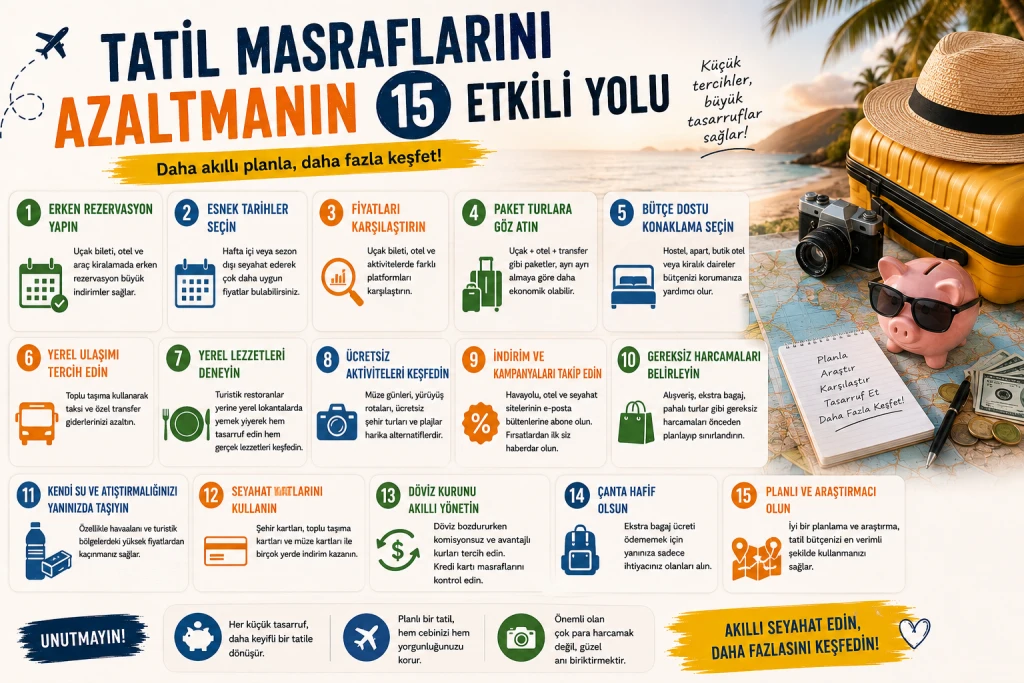
15 Effective Ways to Reduce Vacation Expenses: Spend Less, Travel More
Taking a vacation does not always require a large budget. With the right dates, the right destination, and the right booking choices, you can significantly reduce your travel expenses.
Between airfare, accommodation, food and drinks, local transportation, and activities, a vacation budget can quickly grow. However, with a few simple planning methods, you can reduce unnecessary expenses and enjoy a longer or more enjoyable vacation with the same budget.
So how can vacation expenses be reduced? Which methods can be used to take an inexpensive vacation? What should you consider when booking a hotel and a flight?
Here are 15 effective vacation-saving methods that will allow you to take your dream trip while protecting your budget!
1. Keep Your Travel Dates Flexible
One of the most effective ways to reduce vacation expenses is to keep your travel dates flexible.
Especially:
- School holidays
- Religious holidays
- Public holidays
- The busiest periods of the summer season
- Special dates such as New Year's
can cause prices to rise.
If possible, plan your trip a few weeks before or after the peak season.
Significant price differences may occur for the same hotel and flight on different dates.
2. Take Advantage of Early Booking Opportunities
If your vacation plans are finalized, do not leave your booking until the last minute.
Especially in popular destinations, early booking can offer:
- More hotel options
- More affordable room rates
- More flight alternatives
- Early-payment advantages
However, before booking, be sure to check the cancellation and modification terms.
3. Compare Different Flight Days
Airfare prices may vary depending on the day and time.
When creating your travel plan, compare different dates instead of looking at only one flight.
For example:
Friday departure – Sunday return
instead of
Tuesday departure – Saturday return
may be a more affordable option.
Comparing several different combinations can provide significant savings in your transportation budget.
4. Research Alternative Airports
Some destinations may have more than one airport.
In addition to the main airport, check alternative airports in nearby cities as well.
However, do not look only at the flight price.
Calculate the following together:
Airfare + Airport transfer + Local transportation
A cheaper flight may end up costing more overall because of a long and expensive transfer.
5. Compare Accommodation Options
Accommodation makes up a significant portion of a vacation budget.
Therefore, do not limit yourself to hotels; you can also consider:
- Apartment hotels
- Boutique hotels
- Hostels
- Villas
- Accommodation options with kitchens
as well.
Alternative accommodation options can reduce the total cost, especially for families and groups of friends.
6. Pay Attention to the Hotel's Location
The cheapest hotel is not always the most economical hotel.
If you stay at a hotel far from the city center, you may need to use a taxi, metro, or bus every day.
Therefore, when choosing a hotel, also consider details such as:
- Distance from the center
- Public transportation connections
- Transportation to the airport
- Access to tourist areas
Sometimes a slightly more expensive hotel may be more affordable overall thanks to reduced transportation costs.
7. Consider Accommodation with Breakfast Included
Having breakfast out every day during your vacation can increase your total budget.
Especially for family vacations, hotels with breakfast included can be advantageous.
However, compare the difference between the price with breakfast and the price without breakfast.
You can only see the actual savings by calculating the total cost.
8. Control Your Food and Drink Expenses
Food and drinks are one of the areas where a budget can grow unnoticed during a vacation.
Instead of eating every meal at tourist restaurants, you can consider:
- Local restaurants
- Lunch menus
- Street food
- Local cafés
- Grocery shopping
For example, having breakfast at the hotel and eating lunch at an affordable local restaurant may allow you to allocate more of your budget to dinner.
9. Make Use of Grocery Stores
Grocery shopping can be an important way to save money, especially during long vacations.
Buying items such as water, fruit, breakfast foods, and snacks from a grocery store may be more economical in some destinations than buying them at restaurants and tourist attractions.
If you have chosen accommodation with a kitchen, preparing your own meals can also reduce your budget.
10. Add Free Activities to Your Plans
You do not have to pay for every activity to enjoy a vacation.
Depending on the destination, you can consider options such as:
- Parks
- Beaches
- Historic streets
- Viewpoints
- City walks
- Local markets
- Free events
This way, you can reserve your budget for the paid activities you truly want to experience.
11. Use Public Transportation Within the City
Using taxis can quickly increase your vacation budget.
Whenever possible, consider public transportation options such as:
- Metro
- Tram
- Bus
- Ferry
- Urban train
Some cities may offer daily or weekly transportation passes.
It may be helpful to research these options before your trip.
12. Calculate Luggage Costs in Advance
When choosing a flight ticket, do not look only at the starting price.
Tickets that do not include baggage allowance may incur additional fees later.
Before booking, check fees such as:
- Carry-on baggage
- Additional baggage
- Seat selection
- Priority boarding
Especially on short trips, you may consider traveling with fewer belongings to avoid unnecessary baggage fees.
13. Compare Travel Insurance and Additional Fees
Travel insurance can be important on international trips. However, when comparing policies, evaluate their coverage and prices together.
Likewise, during the booking process, check additional costs such as:
- Taxes
- Service fees
- Transfer fees
- Baggage fees
- Tourist taxes
The initially displayed price may not be the same as the final payment price.
14. Compare Tour Packages with Independent Travel
Making individual bookings may not be cheaper for every trip.
Also consider packages that combine:
- Flights
- Hotels
- Transfers
- Guides
- City tours
Compare the total price of a tour package with the cost of purchasing the same services individually.
What matters is not the price of a single service, but the total vacation cost.
15. Set Your Vacation Budget from the Start
One of the most important ways to keep vacation expenses under control is to set a budget before setting out on your trip.
For example:
Transportation: 15,000 TRY
Accommodation: 20,000 TRY
Food and drinks: 10,000 TRY
Activities: 5,000 TRY
Local transportation: 3,000 TRY
Shopping: 2,000 TRY
Emergency fund: 5,000 TRY
This way, you can see your total budget in advance.
Bonus Tips for Reducing Vacation Expenses
In addition to the 15 methods above, a few small details can also make a difference in your vacation budget.
Before Traveling
- Compare flight prices for different dates.
- Read hotel reviews.
- Research transfer options.
- Learn about local transportation passes.
- Check admission fees in advance.
- Monitor the exchange rate.
During Your Vacation
- Compare prices in tourist areas.
- Try not to use a taxi every day.
- Avoid unnecessary shopping.
- Make use of grocery stores.
- Stick to your daily spending limit.
Where Can You Save the Most in a Vacation Budget?
Generally, the greatest savings opportunities can be found in these three areas:
1. Transportation
You can make a significant difference by changing your travel dates or comparing alternative transportation options.
2. Accommodation
The season, location, room type, and booking date can significantly affect the price.
3. Food and Drinks
Choosing grocery stores and local restaurants instead of eating every meal at a restaurant can reduce daily expenses.
Planning these three areas properly makes it easier to keep your vacation budget under control.
Which Periods Should You Choose for a More Affordable Vacation?
Periods outside the peak season can generally offer more options.
For a summer vacation, for example:
early June or September
may offer more affordable prices than July and August, depending on the destination.
For a winter vacation, dates outside busy periods such as school holidays and New Year's can be considered.
However, since prices vary by destination, it is important to compare current options before booking.
Can an Affordable Vacation and a Quality Vacation Go Together?
Absolutely.
An economical vacation does not mean:
“Choosing the cheapest option.”
Instead, the main goal is:
“Getting the best possible value for the money you pay.”
For example, you can save on transportation costs by choosing a slightly more central hotel, set aside a budget for dining at a quality restaurant, or choose a better room through early booking.
What Not to Do While Reducing Vacation Expenses
While trying to save money, also avoid some mistakes that could negatively affect your vacation experience.
❌ Choosing only the cheapest flight ticket
❌ Choosing unreliable accommodations
❌ Completely ignoring insurance and cancellation terms
❌ Compromising on safety
❌ Increasing transportation costs by choosing a very distant hotel
❌ Reducing the daily food budget to an unrealistic level
The purpose of saving is not to make the vacation more difficult, but to use your budget more wisely.
Have More Vacations by Spending Less
You do not need to make major sacrifices to reduce vacation expenses. Choosing the right dates, booking early, comparing accommodations, using affordable transportation, and controlling food and drink expenses can make a significant difference in your budget.
Set your total budget before traveling, calculate each expense individually, and compare different options.
This way, you can take a longer vacation with the same budget, participate in more activities, or choose more comfortable accommodation.
Do not postpone your dream vacation. Set your budget, choose your destination, compare the flight, hotel, and tour options that suit you, and plan your booking now!