


Asia's Top Gastronomic Destinations
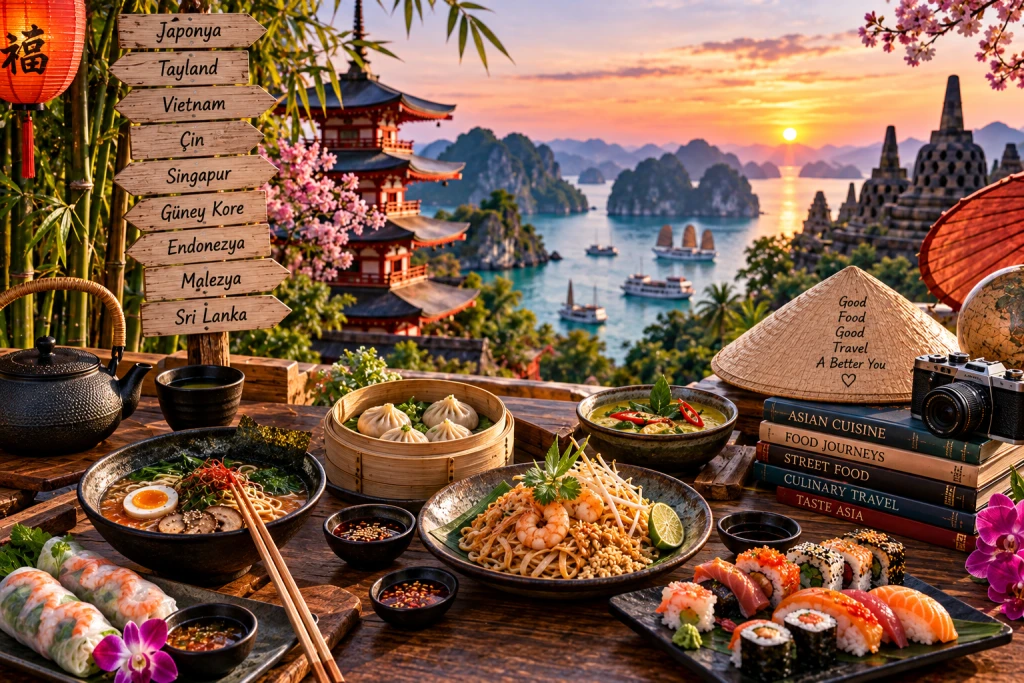
Asia's Top Gastronomy Destinations | 2026 Gourmet Travel Guide
Asia is home to some of the world's richest and most diverse culinary cultures. From Japan's sushi and ramen to Thailand's street flavors, South Korea's fermented tastes to Vietnam's pho, Cantonese cuisine in Hong Kong to Singapore's hawker culture, every region of the continent offers a unique gastronomic experience.
Moreover, gastronomy in Asia is not limited to luxury restaurants. Street markets, night markets, local restaurants, family-run businesses, traditional dishes, and modern chef restaurants can all be explored within the same trip.
In 2026, gastronomy is becoming an increasingly important motivation for travel in Asia. According to Agoda's 2026 research, food experiences rose into the top three motivations for Asian travelers, while Bangkok emerged as the highest-ranked city in Asia on Time Out's 2026 World Food Cities ranking.
So, which cities should be chosen for a gastronomy tour in Asia? What should be eaten in which countries? What are the best Asian dishes?
In this guide, you can find Asia's standout destinations from a gastronomic perspective and the must-try flavors in each city.
What is a Gastronomy Tour in Asia?
A gastronomy tour in Asia is a type of travel undertaken to explore a country's or city's food culture.
Instead of just visiting restaurants during these trips;
- Street food
- Local markets
- Night markets
- Traditional restaurants
- Michelin-starred restaurants
- Cooking workshops
- Coffee culture
- Tea culture
- Local producers
- Fish markets
- Traditional desserts
- Regional products
various experiences can be combined.
One of the most important features that makes Asia special from a gastronomic perspective is the coexistence of traditional cuisine and modern gastronomy in the same city. In Michelin Guide's 2026 Asia selection, cities like Seoul, Bangkok, Tokyo, and Singapore stand out with a wide range from traditional dishes to modern tasting menus.
Asia's Top 12 Gastronomy Destinations
1. Tokyo, Japan
Tokyo is one of the first cities that come to mind when gastronomy in Asia is mentioned.
Traditional Japanese cooking techniques meet modern restaurant culture here. On one side, there are small ramen and yakitori restaurants, while on the other, high-end restaurants serving kaiseki and modern Japanese cuisine are located.
According to the Michelin Guide, Tokyo continues to stand out as the city with the most Michelin-starred restaurants in the world, offering a very wide variety of cuisines.
What to eat in Tokyo?
- Sushi
- Ramen
- Yakitori
- Tempura
- Wagyu
- Soba
- Udon
- Kaiseki
- Matcha desserts
- Japanese cheesecake
Ideal areas for gastronomy
Tsukiji – Ginza – Shinjuku – Shibuya – Asakusa
Exploring Tokyo not only through restaurants but also through its markets and small neighborhood businesses offers a much more comprehensive experience.
2. Bangkok, Thailand
Bangkok is one of Asia's strongest gastronomy cities.
In the 2026 Time Out ranking, Bangkok became the world's 2nd best food city and the highest-ranked gastronomy destination in Asia. The city's street food, chefs reinterpreting regional Thai cuisine, and food culture in different neighborhoods were particularly highlighted.
What to eat in Bangkok?
- Pad Thai
- Tom Yum
- Green Curry
- Massaman Curry
- Tom Kha Gai
- Mango Sticky Rice
- Som Tam
- Satay
- Boat Noodles
Must-explore
Yaowarat – Chinatown – Talat Noi – Song Wat
When taking a gastronomy tour in Bangkok, make sure to allocate time not only to restaurants but also to street stalls and night markets.
3. Seoul, South Korea
Seoul, where traditional Korean cuisine meets modern gastronomy, is one of Asia's most striking food cities.
Kimchi, fermented sauces, and traditional cooking methods form the core character of Korean cuisine, while modern restaurants reinterpret these flavors with different techniques.
In the 2026 evaluation by the Michelin Guide, Seoul stands out with its traditional food culture, strong Bib Gourmand options, and modern Korean cuisine.
What to eat in Seoul?
- Korean BBQ
- Bibimbap
- Kimchi
- Bulgogi
- Tteokbokki
- Gimbap
- Gomtang
- Gejang
- Japchae
- Hotteok
Gastronomy experience
In Seoul, after visiting traditional markets, you can enjoy tasting menus at modern Korean restaurants.
4. Singapore
Singapore is a gastronomy destination offering extraordinary diversity within a small area.
The influences of Chinese, Malay, Indian, and Peranakan cultures shape the character of Singaporean cuisine.
One of the city's most important features is the strong presence of daily street food alongside high-end gastronomy in the same city. In the 2026 Singapore selection of the Michelin Guide, over 300 establishments are listed, featuring both starred restaurants and Bib Gourmand addresses.
What to eat in Singapore?
- Hainanese Chicken Rice
- Laksa
- Chili Crab
- Char Kway Teow
- Satay
- Nasi Lemak
- Kaya Toast
- Roti Prata
Areas to explore for gastronomy
Chinatown – Little India – Kampong Glam – Joo Chiat
Especially exploring Peranakan cuisine can differentiate the Singapore gastronomy experience. National Geographic also highlights Peranakan cuisine as one of the city's standout cultural flavors in its 2026 gastronomy selection.
5. Hong Kong
Hong Kong is one of the world's important gastronomy centers, especially regarding Cantonese cuisine.
The fact that the top two spots on the 2026 Asia's 50 Best Restaurants list went to Hong Kong's The Chairman and Wing restaurants once again revealed the city's power in Asian gastronomy.
What to eat in Hong Kong?
- Dim sum
- Char siu
- Roast goose
- Wonton noodles
- Egg tart
- Pineapple bun
- Congee
- Milk tea
Gastronomy experience
Having a traditional dim sum breakfast in the morning and strolling through street markets in the afternoon could be an ideal start for a gastronomy tour in Hong Kong.
6. Osaka, Japan
While Tokyo stands out as Japan's gastronomy capital, Osaka draws attention with its more relaxed, street-food-focused gastronomy culture.
The concept of "eating in the city" is quite strong in Osaka's food culture.
In the 2026 Time Out list, Osaka ranked 12th among world food cities. Beyond traditional street food, the city also stands out with modern interpretations of classics like tonkatsu and udon.
What to eat in Osaka?
- Takoyaki
- Okonomiyaki
- Kushikatsu
- Udon
- Ramen
- Tonkatsu
- Sushi
- Wagyu
Must-see
Dotonbori – Kuromon Ichiba Market – Namba
7. Hanoi, Vietnam
For those wanting to explore Vietnamese cuisine, Hanoi is one of Asia's most important gastronomy cities.
Fresh herbs, rice, noodles, seafood, and aromatic sauces form the foundation of Vietnamese cuisine.
In the 2026 Tripadvisor Travelers' Choice Best of the Best ranking, Hanoi was placed in the upper ranks as one of Asia's standout food destinations, following Bangkok.
What to eat in Hanoi?
- Pho
- Bun Cha
- Banh Mi
- Goi Cuon
- Cha Ca
- Egg Coffee
- Bun Bo Nam Bo
Gastronomy experience
One of the best ways to discover Hanoi's food culture is to join a local street food tour.
8. Ho Chi Minh City, Vietnam
Ho Chi Minh City in southern Vietnam is a strong alternative for gastronomy tours with its bustling streets and rich food culture.
In the 2026 Time Out World Food Cities list, Ho Chi Minh City ranked 6th. The city stood out for the coexistence of street food and a developing modern gastronomy scene.
What to eat in Ho Chi Minh City?
- Banh Mi
- Pho
- Bun Thit Nuong
- Com Tam
- Goi Cuon
- Vietnamese Coffee
- Seafood
9. Taipei, Taiwan
Taipei is one of Asia's most entertaining gastronomy destinations, especially thanks to its night markets.
In the city, different regional influences of Chinese cuisine meet the food culture unique to Taiwan.
What to eat in Taipei?
- Beef noodle soup
- Xiao long bao
- Scallion pancake
- Gua bao
- Lu rou fan
- Stinky tofu
- Bubble tea
- Oyster omelette
Taipei is one of the ideal options for those who want to create a route centered around night markets on a food-focused city tour.
10. Penang, Malaysia
Malaysia's Penang region, especially around George Town, attracts the interest of food enthusiasts with its multicultural dishes.
Chinese, Malay, Indian, and Peranakan influences meet on the same table here.
What to eat in Penang?
- Char Kway Teow
- Penang Laksa
- Nasi Kandar
- Hokkien Mee
- Rojak
- Satay
- Nyonya dishes
It is also seen in the results of the 2026 Asia's 50 Best Restaurants that Penang is a rising destination from a gastronomic perspective; the city was represented in the 1-50 section of the list for the first time.
11. Bali and Ubud, Indonesia
Bali can be explored not only with its beaches and nature but also with Indonesian cuisine and Bali-specific food culture.
Especially Ubud draws attention with the coexistence of traditional dishes and modern, healthy cuisine concepts.
What to eat in Bali?
- Nasi Goreng
- Mie Goreng
- Nasi Campur
- Babi Guling
- Satay
- Gado-gado
- Lawar
- Balinese coffee
When including Ubud in your gastronomy route, adding local markets and producer experiences to the program along with traditional Balinese dishes will enrich the trip.
The fact that Ubud appeared in the 1-50 ranking of the 2026 Asia's 50 Best Restaurants list also points to the rise of the region's gastronomy scene.
12. Shanghai, China
Shanghai is one of the important gastronomy centers that combines different regional influences of Chinese cuisine with modern city life.
In the 2026 Asia's 50 Best Restaurants list, Meet the Bund from Shanghai ranked 6th, and Ling Long ranked 9th.
What to eat in Shanghai?
- Xiaolongbao
- Shengjian mantou
- Scallion pancakes
- Hong shao rou
- Wonton
- Shanghai noodles
- Chinese tea
There is a very wide range of options in the city, from traditional breakfast culture to modern restaurants.
How to Plan the Best Route for a Gastronomy Tour in Asia?
Since Asia is a vast geography, it is more logical to combine a few nearby or easily accessible destinations rather than trying to see too many countries in a single trip.
7-Day Example Southeast Asia Gastronomy Route
Bangkok → Chiang Mai → Hanoi
This route;
- Thai street food
- Northern Thai cuisine
- Vietnamese street food
- Local markets
- Coffee culture
combines various experiences.
Which Are the Best Countries for a Gastronomy Tour in Asia?
You can choose your destination according to your travel style.
🍜 For Street Food
Thailand – Vietnam – Taiwan – Malaysia
🍣 For Fine Dining
Japan – Singapore – Hong Kong – South Korea
🥢 For Traditional Cuisine
Japan – China – South Korea – Vietnam
🌶️ For Spicy Dishes
Thailand – Malaysia – Indonesia – India
☕ For Coffee Culture
Vietnam – Indonesia
🌃 For Night Market Experience
Taiwan – Thailand – South Korea – Vietnam
Don't Just Visit Luxury Restaurants on Your Gastronomy Tour in Asia
One of the most important points of a gastronomy tour is knowing that expensive restaurants do not always offer the best experience.
In many cities in Asia, local food culture;
- At street stalls,
- In night markets,
- In small family restaurants,
- In neighborhood eateries,
- In traditional markets
is kept alive.
Therefore, instead of allocating your entire budget to fine dining restaurants, including local and daily food experiences can create a more comprehensive gastronomy trip.
What Should Be Considered When Taking a Gastronomy Tour in Asia?
1. Research Local Markets
One of the best ways to get to know a city's food culture is to visit local markets.
2. Pay Attention to Meal Times
Some popular street foods may be prepared at specific times or may sell out early.
3. Start with Small Portions
If you want to try many dishes in a city, prefer small portions.
4. Pay Attention to Hygiene
Especially in street food, pay attention to crowding, storage conditions of the food, and preparation environments.
5. Plan Restaurants Requiring Reservations in Advance
Reservations may be required, especially at Michelin-starred or very popular restaurants.
6. Learn Local Food Names
Knowing a few basic dish names can make ordering much easier.
7. Specify Allergies in Advance
If you have food allergies or special dietary needs, inform the restaurant staff in advance.
What Is the Best Season for a Gastronomy Trip in Asia?
There is no single "best gastronomy season" in Asia.
Because the climates of the countries are quite different from each other.
Japan
Spring and autumn are popular periods for city tours and exploring seasonal products.
Thailand
It is important to check regional rainfall periods when planning a trip.
Vietnam
Weather conditions can vary between northern, central, and southern regions.
South Korea
Spring and autumn can be considered comfortable periods for city tours and outdoor activities.
Singapore
Since it has a tropical climate year-round, it is possible to plan the travel date more according to events and budget.
Checking the destination's current weather conditions and seasonal characteristics before traveling will be the most correct approach.
How Should Accommodation Be Selected for a Gastronomy Vacation in Asia?
In gastronomy-focused trips, the hotel's location is very important.
When choosing accommodation:
- Proximity to local markets
- Restaurant density
- Night transportation
- Public transport
- Access to city center
- Airport access
- Safety of the area
evaluate criteria such as these.
For example, if you want to explore street food in Bangkok, look not only at the hotel's star rating but also at which neighborhood it is located in.
How to Budget for a Gastronomy Tour in Asia?
The budget for a gastronomy vacation can vary significantly depending on the chosen destination and restaurants.
You can divide the total budget as follows:
Flights + Hotel + City Transport + Daily Meals + Gastronomy Experiences + Restaurant Reservations + Activities + Personal Expenses
If you plan to dine at Michelin-starred restaurants, it is beneficial to determine the restaurant budget separately before the trip.
Additionally, you can create more economical gastronomy experiences thanks to street food and local markets.
Gastronomy and Culture Should Be Explored Together in Asia
In Asia, food is often not just food.
A bowl of ramen can tell about Japan's sense of seasonality; kimchi, Korea's fermentation culture; dim sum, the Cantonese cuisine tradition; and street food can describe Bangkok's daily life.
Therefore, planning the gastronomy tour as;
food + history + culture + market + neighborhood + local life
will make your trip more meaningful.
Asia's Top Gastronomy Destinations
Asia is a continent offering almost unlimited options for food lovers.
Sushi in Tokyo, street food in Bangkok, Korean BBQ in Seoul, hawker culture in Singapore, dim sum in Hong Kong, takoyaki in Osaka, pho in Hanoi, night market flavors in Taipei, and multicultural cuisine in Penang…
Each destination tells a different food story.
2026 data also shows how strong the region's gastronomy scene is: Bangkok moved up to 2nd place among world food cities, while Ho Chi Minh City, Beijing, Osaka, Bengaluru, and Hong Kong also made it among the world's standout food cities. On the Asia's 50 Best Restaurants 2026 list, centers like Hong Kong, Bangkok, Seoul, Shanghai, Singapore, and Ubud drew attention.
Therefore, plan your next Asia trip not just with the question "Which cities will I see?" but with "Which foods and culinary cultures will I explore?"
Plan Your Asia Gastronomy Route Now
Select your destination → define your gastronomy theme → compare flight and accommodation options → research local restaurants and food experiences → create your route → embark on your flavorful Asia trip.