


How to Research a City You're Visiting for the First Time
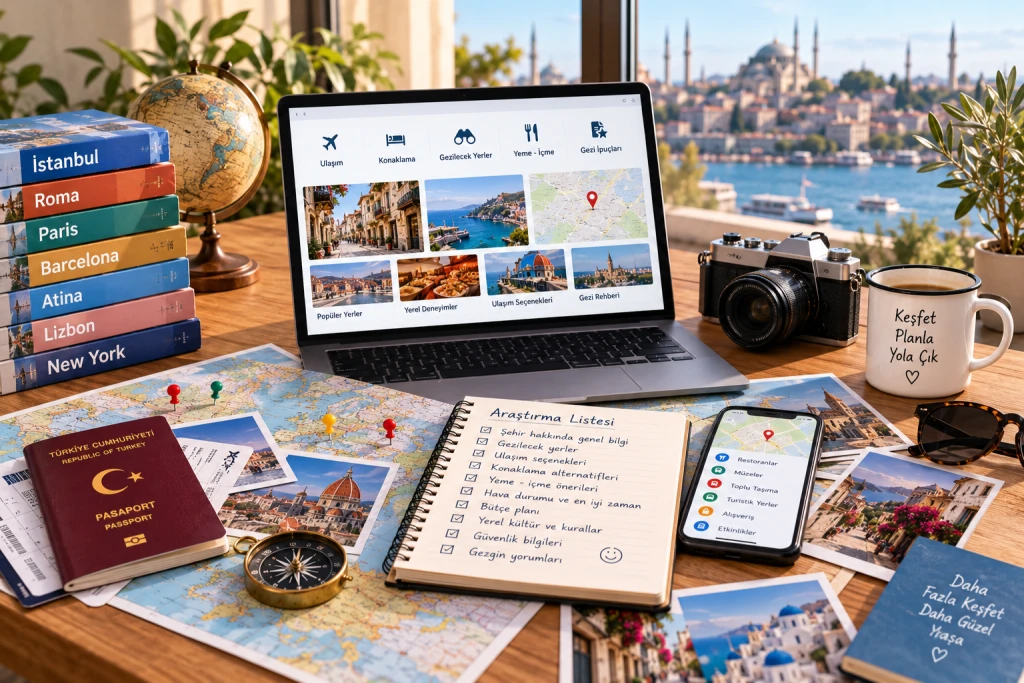
How to Research a City You Are Visiting for the First Time? | 2026 Travel Guide
For a city you are visiting for the first time, simply searching "What should I visit?" is not enough. Before traveling, you must also know about the city's transportation, accommodation areas, safety, weather, food and drink culture, attractions, budget, and local rules.
In particular, spending just a few hours researching a city you have never visited before can prevent you from wasting time during your vacation, staying in the wrong area, or making unnecessary expenses.
So, how do you research a city you are visiting for the first time? What should you check before going to a city? Which information must you learn?
In this guide, we explain step by step how you can research a new city before planning your trip.
Why Should You Research a City You Are Visiting for the First Time?
Researching a city beforehand allows you to plan your trip more consciously.
By researching:
- You can identify places to visit in advance.
- You can choose an accommodation area suitable for you.
- You can learn how to get from the airport to your hotel.
- You can understand the city's public transport system.
- You can calculate your average travel budget.
- You can learn local rules.
- You can be better prepared regarding safety.
- You can use your time more efficiently.
For international trips, it is especially important to check entry requirements, visas, passport validity, local laws, health information, and safety warnings from official sources. Up-to-date travel checklists also recommend researching these topics before traveling.
1. First, Research the General Characteristics of the City
When you start researching a city you are visiting for the first time, do not immediately search for restaurants and hotels; instead, learn the city's general structure first.
You can start with these questions:
- Is the city large or small?
- Where is the tourist center?
- How many districts does the city consist of?
- Is it on the coast?
- Does it have a historic center?
- Is transportation within the city easy?
- Which areas are touristy?
- Which areas are quieter?
- How many days does it take to explore the city?
For example, in large cities like Rome, Paris, or Istanbul, it may not be possible to see all important spots in a short time.
Therefore, understanding the city's general map makes your subsequent research much easier.
2. Identify Places to Visit in the City
When researching a city, the first thing that comes to mind is naturally places to visit.
However, do not add every place you see on the internet to your travel itinerary.
First, you can create three separate lists:
Must-see places
The main highlights of your trip.
Nice to see
Places to visit if you have extra time.
Based on your interests
Places selected according to personal preferences such as museums, shopping, gastronomy, art, nature, or nightlife.
This method prevents you from overfilling your travel itinerary.
3. Group Places to Visit on a Map
In cities visited for the first time, one of the biggest causes of wasted time is moving unnecessarily from one place to another within the city.
For example:
Museum A → Museum B → Historic Square → Restaurant → Palace
Instead, it might be more efficient to plan nearby points on the same day.
Practical method:
Mark all the points you want to visit on the map.
Then:
Create groups like:
North district → Center → Historic district → Beach
This way, your daily tour route becomes more logical.
4. Research Which Area to Stay In
"Which hotel should I stay in?"Before asking this question:
It is more correct to answer:
"Which district of the city should I stay in?"
Because different areas in the same city can offer completely different travel experiences.
An area might:
- Be close to historic sites.
- Stand out for its nightlife.
- Be more suitable for families.
- Be near the beach.
- Be close to public transport.
- Be quieter.
- Be more economical.
When choosing accommodation, you need to look not only at the hotel price but also at its location and surroundings. It is also recommended to read hotel reviews and evaluate proximity to important transport points to ensure safe and accessible accommodation.
5. Learn How to Get from the Airport to the City Center
Knowing what to do as soon as you land in a city you are visiting for the first time is a huge advantage.
Research the following information in advance:
- How far is the airport from the city center?
- Is there a metro?
- Is there a train?
- Is there an airport bus?
- Approximately how much are taxi fares?
- Is there a private transfer option?
- Is night transport possible?
- What time is the last transport from the airport?
Especially if you are arriving late at night, learning about transport options in advance is very important.
6. Research City Transportation
It is not correct to prepare a daily tour itinerary without understanding the city's transport system.
Learn about:
- Metro
- Tram
- Bus
- Train
- Ferry
- Taxi
- Bicycle
- Walking
- Car rental
Also:
Is a single ticket used?
Is there a daily transport card?
Can contactless payment be made?
Is there a tourist card?
Research details like these.
In some cities, daily or multi-ride transport cards can be more practical than buying a separate ticket every day.
7. Review the City Map in Advance
Spending just a few minutes reviewing the map before your trip can make a big difference.
Mark the following specifically on the map:
- Hotel
- Airport
- Train station
- Metro stops
- Places to visit
- Restaurants
- Grocery stores
- Pharmacies
- Hospitals
- Tourist information points
Also, downloading an offline map before traveling can be helpful. Being able to use navigation when there is no internet connection is a significant advantage, especially in cities visited for the first time.
8. Research How Many Days You Need to Stay in the City
There is no single answer to the question "How many days does it take to tour this city?".
Because the number of days you need to stay in the city:
- Depends on the number of places to visit,
- Your purpose of travel,
- Your pace of sightseeing,
- Your interest in museums,
- Day trips outside the city,
- Your need for rest
varies accordingly.
A general starting point:
City Type | Suggested Duration |
Small city | 1-2 days |
Medium-sized city | 2-4 days |
Large European city | 3-5 days |
Very large metropolis | 4-7 days |
City + Surrounding tours | 5-7+ days |
These are not absolute rules; they are starting points for travel planning.
9. Research Prices in the City
Simply researching hotel prices before going to a city is not enough.
Try to understand the city's general cost of living.
For example:
- Coffee
- Water
- Breakfast
- Lunch
- Dinner
- Public transport
- Taxi
- Museums
- Tours
- Airport transfer
Research the approximate costs of these expenses.
This way, you can create a more realistic holiday budget.
10. Learn the Local Currency and Payment Methods
If you are going abroad, make sure to learn the currency of the city you are visiting.
Also:
- Are credit cards widely accepted?
- Is contactless payment available?
- Is cash required?
- Are ATMs easily found?
- Where are exchange offices?
- Is there an additional fee for card usage?
Research topics like these as well.
Not relying solely on cards or solely on cash ensures you have alternatives during your trip.
11. Research the Weather and Season
The same city can offer a completely different experience in different seasons.
Once your travel date is set:
- Average temperature
- Precipitation
- Wind
- Daylight duration
- Sea temperature
- Chance of snow
Check information like these.
Especially if you are planning a trip focused on outdoor activities, do not prepare your itinerary without considering the weather.
12. Check Special Events in the City
During your travel dates, check if there are any:
- Festivals
- Concerts
- Sports matches
- Fairs
- Official holidays
- Local celebrations
- Major events
in the city.
These events can make your trip more special but may also increase hotel and transport congestion.
Therefore, checking the event calendar before your travel date is beneficial.
13. Research Local Food
One of the best ways to get to know a city is to explore its cuisine.
Before traveling:
- Famous local dishes
- Local sweets
- Street food
- Traditional restaurants
- Markets
- Breakfast culture
You can research these.
However, do not stick only to restaurants popular on social media.
Comparing local sources, up-to-date reviews, and experiences from different users can yield healthier results.
14. Research Restaurants Based on Location
To avoid having to cover long distances for every meal during your trip, you can research restaurants according to your daily route.
For example:
Morning → Historic district
Noon → Around the museum
Evening → Area where your hotel is located
Planning like this can be more practical.
This way, you won't need to make unnecessary transport within the city for meals.
15. Research Safety Conditions
Safety research must definitely be done in a city you are visiting for the first time.
Especially for international trips:
- Current travel advisories
- Local laws
- Protests
- Natural disaster risk
- Health conditions
- Scam methods
- Theft risk
- Night transport
Research topics like these.
Official travel sources also recommend checking safety warnings, entry conditions, local laws, health information, and special situations in destination research.
16. Learn About Scam Methods in Tourist Areas
The same scam methods are not seen in every city.
Therefore, before traveling:
"[City name] tourist scams"
or
"[City name] scam methods"
You can search for terms like these.
Especially:
- Taxis
- Restaurants
- Fake tickets
- Fake tours
- Street vendors
- ATMs
- Currency exchange
- Fake reservations
Be careful with topics like these.
Official travel security sources also recommend researching the reliability of taxi and transport companies in advance, reading accommodation reviews, and sharing your travel plan with someone you trust.
17. Research Local Rules and Culture
Simply researching tourist sites before going to a city is not enough.
You also need to gain basic knowledge about the local culture.
For example:
- Clothing rules in religious places
- Photography rules
- Behavior on public transport
- Tipping culture
- Restaurant rules
- Local bans
- Nightlife rules
can vary from country to country and city to city.
Researching local laws and customs before traveling is listed as one of the basic preparation steps in official travel guides.
18. Research Internet and Phone Status in the City
Preparing in advance for phone and internet usage abroad is important.
Check the following:
- Roaming fees
- eSIM options
- Local SIM cards
- Free Wi-Fi
- Mobile internet
- Offline maps
Internet connectivity may be important especially for banking apps, navigation, translation, and reservation information.
19. Learn Emergency Contact Information
In cities visited for the first time, knowing where to turn in an emergency is important.
Before traveling:
- General emergency number
- Police
- Ambulance
- Fire department
- Nearby hospital
- Embassy or consulate
- Hotel contact information
Save information like these.
Also, sharing your travel plan and accommodation details with someone you trust can be beneficial.
20. Do Not Evaluate Hotel Reviews Only by Score
A hotel receiving a 9/10 score is not sufficient on its own.
When reading reviews, pay attention especially to these keywords:
- Location
- Transport
- Noise
- Cleanliness
- Safety
- Room size
- Breakfast
- Staff
- Air conditioning
- Wi-Fi
For example, if silence is important to you, especially review comments about "noise".
Read reviews related to your needs rather than just the hotel score.
21. Research Tourist Cards in the City
In some cities, special offers for tourists:
- Museum passes
- Public transport cards
- City cards
- Combined tickets
- Hop-on hop-off options
may be available.
However, not every tourist card is automatically advantageous.
The card's:
Price + Included places + Usage duration + Transport benefits
should be evaluated together.
22. Research Free Places to Visit
Not every activity in a city has to be paid.
While researching:
- Free museums
- Parks
- Viewpoints
- Historic squares
- Markets
- Beach walks
- Free city events
Find options like these as well.
This method is beneficial especially for those who want to plan a budget-friendly trip.
23. Create Your Own Route in Google Maps
Creating a personal map before your trip is very useful.
For example, you can create different categories:
🔵 Places to visit
🟢 Restaurants
🟡 Hotel
🔴 Emergency points
🟣 Shopping
This way, you can more easily see where you are and where your next stop is during your trip.
24. Use Social Media for Inspiration, Not as the Only Source
Instagram, TikTok, and YouTube can be very helpful for getting ideas about new cities.
However, not every piece of information you see on social media is up-to-date or objective.
A place might:
- Be very popular,
- Be smaller in reality,
- Be closed out of season,
- Be very crowded,
- Be further away than expected.
Therefore, compare social media suggestions with official sources, maps, and up-to-date user reviews.
25. Turn Your Research into a Travel Plan
It is important to gather the information you have researched in one place.
A simple travel plan can be prepared as follows:
Day | Area | Activity | Transport | Food |
Day 1 | Historic center | Historic sites | Walking | Local restaurant |
Day 2 | City center | Museum + Shopping | Metro | Local cuisine |
Day 3 | Beach | Beach + Free time | Public transport | Seafood |
Day 4 | Surrounding area | Day trip | Train / Car | Local restaurant |
In this way, you can turn your city research directly into an actionable travel itinerary.
What to Check When Researching a City You Are Visiting for the First Time
To summarize briefly, when researching a city, you must definitely check these 15 topics:
- Places to visit
- Accommodation areas
- Airport transport
- City transport
- Weather
- Local currency
- Average prices
- Local food
- Restaurants
- Safety
- Local laws
- Events and festivals
- Internet and phone
- Emergency information
- Visa and entry requirements
These topics are a good starting point for creating a basic travel file about a city you are visiting for the first time.
What Should Be the Order of Research for a City You Are Visiting for the First Time?
To make the research easier, you can use the following order:
1. Get to know the city
Learn the general location and city structure.
2. Identify places to visit
Establish your priorities.
3. Review the map
Divide places to visit into districts.
4. Choose the accommodation area
Find the neighborhood suitable for your travel purpose.
5. Research transport
Learn about airport and city transport.
6. Calculate the budget
Take into account hotels, transport, food, and activities.
7. Check safety
Review current advisories and local rules.
8. Check the weather
Plan clothing and activities accordingly.
9. Research food and restaurants
Add local experiences to your itinerary.
10. Create your daily route
Turn your research into a real travel plan.
1-Hour Research Plan for a City You Are Visiting for the First Time
Even if you don't have much time, you can research a city at a basic level in approximately one hour.
First 10 minutes
Review the map.
10-20 minutes
Identify important places to visit.
20-30 minutes
Compare accommodation areas.
30-40 minutes
Research airport and city transport.
40-50 minutes
Review average prices and restaurants.
50-60 minutes
Check safety, local rules, weather, and important events.
At the end of this research, you may have enough information to create a basic travel plan for the city.
Mistakes Made When Researching a City You Are Visiting for the First Time
Relying only on Instagram
Every place popular on social media may not suit your travel itinerary.
Looking only at places to visit
Itineraries prepared without researching transport and accommodation may not be realistic.
Not using the map
You might put places far apart on the same day.
Selecting the hotel only based on price
A cheap hotel might end up being more expensive overall due to transport costs.
Not doing safety research
Local advisories and specific risks must be checked before traveling.
Filling every day
There may be no time left for rest and spontaneous exploration.
Not checking up-to-date information
Transport lines, entry requirements, opening hours, and events can change over time.
City Research Checklist for Your First Visit
You can check the following list before your trip:
- I reviewed the city map.
- I identified places to visit.
- I divided places to visit into districts.
- I chose the accommodation area.
- I read hotel reviews.
- I researched airport transport.
- I learned about city transport.
- I checked transport cards.
- I researched average prices.
- I learned about local food.
- I identified restaurant alternatives.
- I checked the weather.
- I looked at the event and festival calendar.
- I researched safety conditions.
- I learned about local rules.
- I checked visa and entry requirements.
- I researched phone and internet options.
- I saved emergency contact information.
- I prepared an offline map.
- I created my daily travel route.
Researching a City Means Experiencing the Trip from the Start
When researching a city you are visiting for the first time, do not focus only on the question "Where can I visit?"
A good travel research;
Places to visit + Accommodation + Transport + Budget + Safety + Weather + Local culture + Food & Drink + Daily route
should cover all these topics.
Thanks to the right research you do before your trip, you can use the time you spend in the city more efficiently, avoid unnecessary transport and expenses, and plan your vacation more comfortably.
Most importantly, instead of wandering around a city you are visiting for the first time without knowing what to do, you can travel with a pre-prepared flexible plan.
Plan Your Trip from Research to Reservation
After determining the city you want to visit, first research the destination, then compare transport and accommodation options.
Explore the destination → Compare city districts → Determine transport and hotel → Create your daily route → Complete your travel reservation.