


How to Pack a Travel Bag
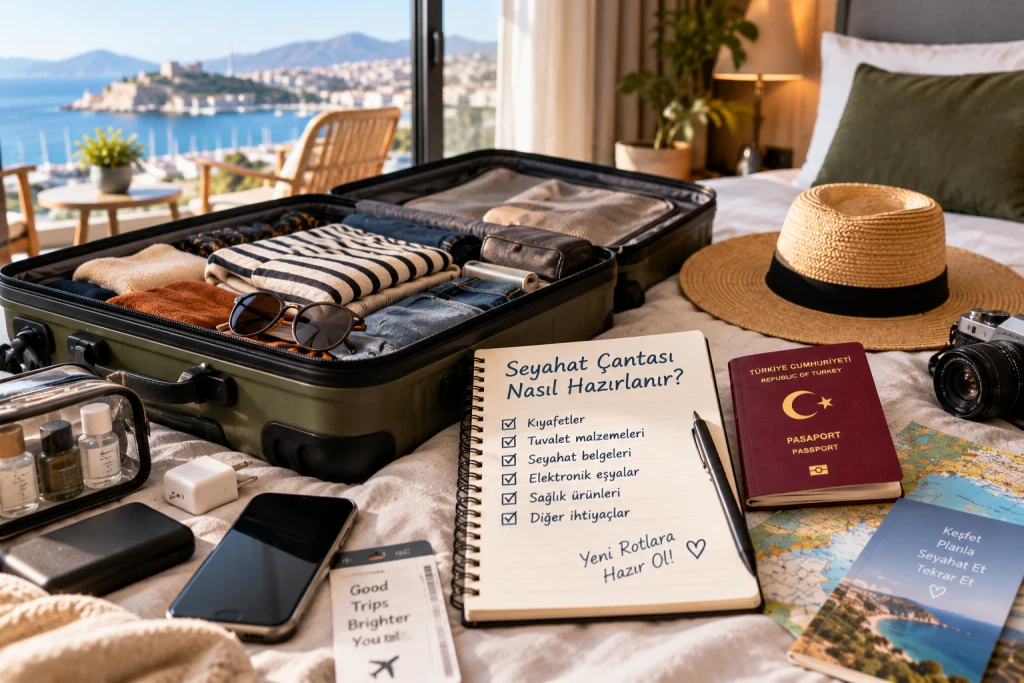
How to Pack a Travel Bag? | 2026 Practical Travel Packing List
One of the most time-consuming preparations before going on vacation or traveling abroad is packing your travel bag. How many clothes should I take? How many pairs of shoes? What can I put in carry-on luggage? Where should I place my passport and electronic devices?
A properly packed travel bag helps you save both time and baggage space during your journey. Choosing only the products you truly need instead of carrying unnecessary items offers significant advantages, especially during air travel.
So, how do you pack a travel bag? What goes into a travel bag? Here is a comprehensive guide to packing a travel bag that you can use for short trips as well as long international journeys.
What Should Be Done Before Packing Your Travel Bag?
Before you start filling your bag directly, define the characteristics of your trip.
First, consider the answers to these questions:
- How many days will you be traveling?
- What is the weather like at your destination?
- What amenities are available at your hotel?
- Will you be traveling by plane or car?
- Will you use carry-on luggage or checked baggage?
- Will you be walking or exercising during your trip?
- Do you have any special events or dinners planned?
- Are you traveling with children?
A bag prepared according to these answers will be both lighter and more practical.
1. Prepare Your Bag According to Your Trip Duration
One of the most common mistakes when packing a travel bag is carrying too many items due to the thought "It might come in handy."
For example, taking 10 different outfits for a 3-day city trip is often unnecessary.
In short trips, you can reduce the number of items in your bag by choosing clothes that can be mixed and matched.
For a 2-3 day trip
- 2-3 tops
- 1-2 bottoms
- Underwear
- Socks
- Sleepwear
- Daily shoes
- One outerwear item if needed
- Basic personal care products
For a 5-7 day trip
- 5-7 days' worth of underwear and socks
- 4-5 tops
- 2-3 bottoms
- 1-2 pairs of shoes
- Pajamas
- Outerwear suitable for the season
- Personal care products
- Electronic devices
If you have access to laundry facilities, you may not need to carry too many clothes even for longer trips.
2. Check the Weather at Your Destination
Checking the weather forecast before packing your travel bag is one of the most important steps.
Even in summer months, there may be areas that get cool in the evenings. In winter trips, precipitation and temperature changes must be taken into account.
Therefore, look not only at temperature values but also;
- Chance of precipitation
- Wind
- Nighttime temperatures
- Humidity levels
- Elevation of the region you are visiting
as well.
Layered clothing allows you to use your bag more efficiently in variable weather conditions.
3. Choose Clothes That Can Be Mixed and Matched
To avoid unnecessarily filling your travel bag, ensure that each piece of clothing can be used in multiple combinations.
For example;
- 3 tops + 2 bottoms = Multiple combinations
- Neutral colors = Easier mixing
- Thin and light fabrics = Less space
- Foldable clothes = Neater bag
Selecting pieces that coordinate with each other is more practical than carrying a different outfit for every day of your trip.
4. Limit the Number of Shoes
Shoes are one of the items that take up the most space in a suitcase.
Therefore, choose a versatile pair of shoes that you can wear throughout your trip if possible.
Generally,
- Daily shoes
- Comfortable walking shoes
- A second pair of shoes for special events if needed
may be sufficient.
Wearing heavy shoes during the journey instead of putting them in the suitcase can also save baggage space.
5. Downsize Personal Care Products
Carrying shampoo, shower gel, cream, and other care products in large packaging can take up unnecessary space in your bag.
You can use travel-sized products or suitable small containers.
If you are traveling by plane, you must pay particular attention to liquid rules in carry-on luggage. Many countries enforce security regulations requiring liquids, aerosols, and gels in carry-on luggage to be in containers of no more than 100 ml; however, since additional applications may vary depending on the airport and country, it is necessary to check the rules of the relevant airport and airline before your trip.
6. Do Not Put Passports and Important Documents in Checked Luggage
Important documents such as passports, IDs, visa documents, flight tickets, and travel insurance should not be handed over to checked baggage.
Carry these documents in your carry-on bag or personal bag where they are easily accessible.
Additionally, before your trip;
- Passport
- Visa
- Flight ticket
- Hotel reservation
- Travel insurance
- Transfer information
- Rental car documents
you can also store digital copies of important documents in a secure location.
7. Place Electronic Devices in the Right Spot
Keeping phones, tablets, computers, cameras, and other electronic devices in an easily accessible place is very convenient during travel.
Particularly for electronic devices containing lithium batteries and spare batteries, you must pay attention to airline regulations. IATA states that power banks and spare lithium batteries must be carried in carry-on luggage; airlines may also apply their own additional restrictions.
Electronics list
- Phone
- Phone charger
- Power bank
- Headphones
- Tablet
- Laptop
- Camera
- Charging cables
- Travel adapter
Before placing power banks and spare batteries in checked luggage, be sure to check your airline's current rules.
8. Don't Forget the Travel Adapter
Socket types used abroad may differ from those in Turkey.
Therefore, check the socket standard of the country you are visiting in advance.
Especially;
- Phone
- Laptop
- Camera
- Hair styling tools
- Electric shaver
if you plan to use devices like these, you may need to carry a suitable travel adapter.
9. Prepare Your Medications and Health Products
Plan enough of your regularly used medications to last throughout your trip.
It may be beneficial to carry medications in their original packaging along with relevant documents like prescriptions whenever possible.
Especially for international trips, entry rules for some medications may differ by country. Check the current rules of the country you are visiting in advance.
In a small travel health kit, depending on your needs;
- Band-aids
- Antiseptic
- Sunscreen
- Insect repellent
- Personal care products
- Regularly used medications
can be kept.
10. Organize Your Bag by Sections
Categorizing your travel bag rather than stuffing it randomly is much more practical.
For example:
Section 1: Clothes
Section 2: Underwear and socks
Section 3: Shoes
Section 4: Personal care
Section 5: Electronics
Section 6: Documents and valuables
Using travel organizers can also help keep your bag organized.
11. Try Rolling Your Clothes
Placing t-shirts, pants, and thin clothes in a rolled shape can help organize your bag.
The rolling method also makes it easier to find the specific piece you want among your clothes.
However, folding may be more suitable for shirts and clothes that wrinkle easily.
The best method is to pack according to the type of clothing.
12. Place Heavy Items in the Right Position
The weight distribution of your suitcase is also important.
You can distribute the weight evenly by placing shoes, electronic devices, or heavy care products in the bottom and appropriate sections of the bag.
Be careful not to place heavy items on top of breakable objects.
The weight limit for your checked baggage must definitely be checked with your airline. Baggage weight and dimensions can vary depending on the airline, route, and ticket class.
13. Essential Items to Always Put in Carry-On Luggage
Carry-on luggage is important not only for items you need on the plane but also for basic products you might need in the first few hours if your checked baggage is delayed.
Basic items that can be found in carry-on luggage:
- Passport
- Wallet
- Phone
- Charger
- Power bank
- Headphones
- Required medications
- An extra t-shirt
- Underwear
- Important documents
- Valuables
However, carry-on luggage size and weight limits can vary depending on the airline, cabin class, and aircraft. Therefore, after purchasing your ticket, be sure to check your flight's baggage allowance.
14. Do Not Give Valuables to Checked Luggage
Cash, passports, jewelry, important electronic devices, and other valuable or hard-to-replace items should not be transported in checked baggage.
IATA also recommends against placing valuable and irreplaceable items in checked baggage.
Therefore, carry your valuables with you whenever possible.
15. Do a Final Check After Preparing Your Bag
Doing a final check before closing your bag can prevent many problems that might occur during your trip.
What Should Be in an International Travel Bag?
When packing for international trips, you can divide your basic needs into three groups:
1. Documents
- Passport
- Visa
- ID
- Flight ticket
- Hotel reservation
- Travel insurance
- Rental car documents
2. Personal Needs
- Clothes
- Underwear
- Socks
- Shoes
- Personal care products
- Medications
- Sunscreen
3. Technology
- Phone
- Charger
- Power bank
- Headphones
- Travel adapter
- Camera
- Laptop or tablet
Baggage Packing Tips for Those Traveling by Plane
When preparing a travel bag for air travel, you must pay attention not only to whether your items fit but also to which items can be carried in which type of baggage.
According to IATA, carry-on and checked baggage rules can vary depending on the airline, route, and cabin class. Therefore, checking the airline's baggage rules directly before your flight is the safest method.
Especially;
- Liquids
- Power banks
- Spare batteries
- Sharp/cutting items
- Sports equipment
- Special equipment
check the current rules.
Most Common Mistakes When Packing a Travel Bag
Avoid the following mistakes when packing your travel bag:
Taking too many clothes
A significant portion of clothes taken with the thought "I might wear them" can return unused.
Taking too many shoes
Shoes take up serious space in the bag. A few options suitable for the purpose of your trip may be sufficient.
Putting the passport in the suitcase
Passports and important documents should always be in an easily accessible place.
Not checking the airline's baggage rules
Baggage allowance is not the same for every airline. Check size and weight limits before your flight.
Putting the power bank in checked luggage
Rules for power banks and spare lithium batteries must be followed for carry-on luggage.
Packing the bag at the last minute
In bags packed at the last minute, there is a higher chance of forgetting passports, medications, chargers, or important documents.
How to Pack a Lighter Travel Bag?
To prepare a lighter travel bag, you can apply the following methods:
- Select clothes according to your trip duration.
- Use pieces that can be mixed and matched.
- Prefer travel-sized personal care products.
- Don't take too many shoes.
- Wear heavy clothes during the journey.
- Reduce electronic devices.
- Check beforehand what basic products are provided by the hotel.
- Remove unnecessary "it might come in handy" items from the bag.
The goal of a well-packed travel bag is not to carry too many items, but to carry the right ones.
Summary of the Travel Bag Packing Guide
When packing your travel bag, first determine the duration of your trip, the weather at your destination, and the activities you will do.
Then select your clothes, reduce your personal care products, organize your electronics, and place your important documents in your carry-on bag.
If you are traveling by plane, be sure to check your airline's current baggage and security rules. Because carry-on and checked baggage limits can vary depending on the airline, route, and ticket class.
Prepare Your Travel Bag and Enjoy the Journey
A well-prepared travel bag provides great convenience at the first step of your journey. Determining the items you need in advance, avoiding unnecessarily weighing down your baggage, and keeping your important documents in an easily accessible place will make your trip more comfortable.
Create your travel plan now. Determine your destination, evaluate flight and accommodation options, select transportation and accommodation alternatives suitable for your trip, and start your preparations.
Remember: A well-planned trip starts with packing the suitcase.