


Ways to Cope with Jet Lag While Traveling
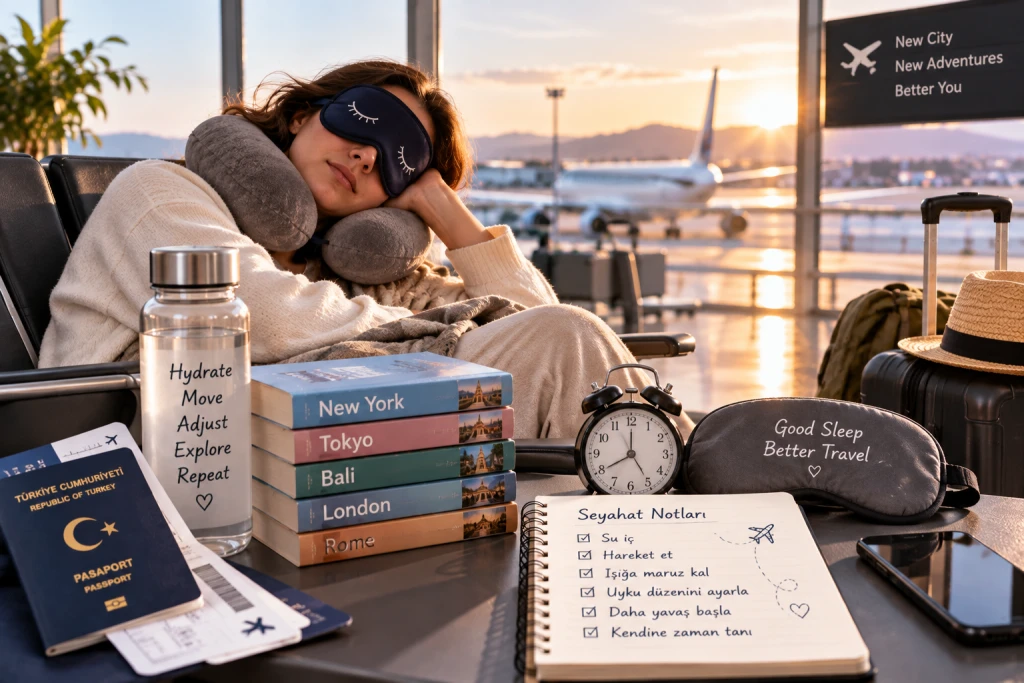
How to Cope with Jet Lag While Traveling | 2026 Guide
You have arrived in a new country after a long flight. The excitement of the vacation is high, but your body is still on another time zone… As sleeplessness at night, excessive daytime fatigue, difficulty concentrating, and weakness set in, the first days of your vacation may not be as enjoyable as you hoped.
One of the most common causes of this situation is jet lag, a sleep disorder caused by a change in time zones.
Jet lag, which can occur especially during intercontinental and long-distance flights, stems from the body's biological clock being unable to immediately adjust to the local time of the destination. In addition to sleep problems, daytime drowsiness, fatigue, concentration issues, and some digestive complaints may also occur.
So, how does jet lag go away, how can it be prevented, and how does the sleep schedule return to normal after a long flight?
Here are practical tips to help you spend the first days of your trip more comfortably.
What is Jet Lag?
Jet lag is a temporary mismatch between the body's biological clock and the local time of the destination when traveling quickly across different time zones.
The body's sleep, wakefulness, hormones, and other daily functions operate within a specific rhythm. When you fly to another country with only a few hours' time difference, it may take time for this rhythm to adjust to the new local time.
Jet lag can become more pronounced when multiple time zones are crossed rapidly.
What are the symptoms of jet lag?
The most common symptoms include:
- Inability to sleep at night
- Waking up too early or with difficulty in the morning
- Excessive daytime sleepiness
- Lethargy and fatigue
- Difficulty concentrating
- Reduced sleep quality
- Changes in appetite
- Digestive issues or stomach discomfort
- General restlessness
may occur.
Jet lag is usually temporary and diminishes within a few days as the body adjusts to the new time zone.
What Causes Jet Lag?
The fundamental cause of jet lag is the difference between the biological clock and local time.
For example, on a long-distance flight from Turkey to America or Asia, several time zones are crossed in a short period. By the time the plane lands, it might be daytime locally, while your body feels like it is nighttime.
Therefore:
Local time: 3:00 PM
Your body's perceived time: 10:00 PM
a mismatch like this can occur.
The body needs time to adapt to the new time.
Does Jet Lag Occur More When Traveling East or West?
The direction of travel can affect the jet lag experience.
Generally, traveling eastward can make adjustment more difficult because the body needs to adapt to earlier sleep and wake times.
When traveling west, adjusting to later hours of the day is relatively easier for most people. The CDC notes that the biological clock can adapt faster when traveling westward.
Therefore, for example:
Turkey → Japan
Turkey → South Korea
on long eastbound flights, special attention should be paid to the sleep schedule.
How Can Jet Lag Be Prevented?
It is not always possible to completely prevent jet lag. However, certain methods applied before and after travel can help alleviate symptoms.
1. Adjust Your Sleep Schedule a Few Days Before Travel
Before a long trip, you can gradually shift your sleep times toward the time of your destination.
If traveling East
You can try going to bed a bit earlier and waking up earlier.
If traveling West
Going to bed a bit later and waking up later may help.
The CDC states that gradually shifting sleep times toward the destination's time zone in the days before travel can facilitate adaptation.
2. Think in Terms of Destination Time While on the Plane
Once you board the plane, instead of constantly following Turkish time, you can start thinking according to the destination's time as much as possible.
If it is nighttime at your destination:
- Create a suitable environment for sleep.
- Use an eye mask.
- Reduce noise.
- Limit phone and screen use.
If it is daytime at your destination, try to stay awake as much as possible.
The CDC recommends adjusting sleep, meals, and light exposure during the flight according to the destination's time zone.
3. Drink Plenty of Water During the Flight
Staying hydrated during long flights is important.
Dehydration can contribute to feeling more tired during travel. The CDC also recommends adequate fluid intake and avoiding excessive alcohol when managing jet lag symptoms.
Therefore, during the flight:
- Drink water regularly.
- Avoid excessive alcohol consumption.
- Avoid too much caffeine.
- Consider avoiding very heavy meals.
4. Limit Alcohol
The thought of "having something to drink on the plane will help me sleep easier" is one of the common mistakes.
Although alcohol may seem to help you fall asleep, it can disrupt sleep quality and cause fragmented sleep throughout the night.
The CDC advises avoiding excessive alcohol consumption in jet lag management.
5. Consume Caffeine at the Right Time
Coffee and other caffeinated drinks can help you stay awake during long flights. However, consuming too much caffeine, especially in the evening and at night, can make it harder to adjust to the new time zone.
Therefore, it may be more correct to plan coffee consumption according to the destination's time rather than just drinking it because you feel "very tired."
The CDC states that caffeine can be used strategically for alertness but should be avoided in the evening hours.
6. Do Not Nap During the Day Upon Arrival
One of the most common mistakes made by those experiencing jet lag is falling asleep for a few hours immediately upon reaching the hotel.
This may seem tempting due to fatigue. However, a long daytime nap can make sleeping at night even more difficult.
If possible:
Arrived at hotel → Instead of a long immediate nap → Spend the day → Sleep at night according to local time
acting in this way may be more beneficial.
The CDC notes that long daytime naps can make nighttime sleep difficult; if necessary, short naps are recommended.
7. Take Short Naps
If you are too sleepy to resist, a short sleep can help.
The important point here is the duration of the sleep.
An approximately 15-30 minute short nap can increase alertness during the day. Long daytime sleeps, however, can make falling asleep at night more difficult.
Therefore:
Short sleep = Energy boost
Long daytime nap = Risk of nighttime sleep problems
can be considered.
8. Take Advantage of Daylight
One of the most important natural tools in fighting jet lag is daylight.
The body's biological clock is strongly influenced by the light-dark cycle. Exposure to natural light at the right time can support adjustment to the new time zone.
Therefore, upon arrival at your destination, try to go outside if possible.
For example:
- Have breakfast outdoors.
- Take a short walk.
- Visit a park or beach.
- Spend time outdoors during the day.
However, at what time light is most beneficial depends on the direction of travel and the number of time zones crossed. Therefore, in cases of large time differences, a personalized plan may be required.
9. Don't Plan a Busy Schedule on the First Day
One of the periods when jet lag is felt most intensely is the first few days of travel.
Therefore, especially after long-distance flights, instead of fitting the first day with:
- 10 different tours
- Activities starting very early
- Programs lasting until late at night
it is more logical to create a calmer schedule.
Example first-day schedule:
Check-in at hotel → Light meal → Short walk → Explore destination → Sleep early/at appropriate time
In this way, you neither disconnect from the vacation nor deny your body the time it needs to adjust.
10. Don't Schedule Important Events Too Early
This is particularly important if you are traveling for business trips, honeymoons, weddings, conferences, or special events.
The CDC recommends arriving at the destination in advance whenever possible to allow the body time to adjust to the new time zone before important events.
For example:
An important meeting on Monday morning
if you have one, arriving earlier than Sunday night to give your body time to adjust may be better.
11. Make Your Sleep Environment Comfortable
Falling asleep in a new hotel can already be difficult as it differs from your familiar environment.
Combined with jet lag, sleep problems can become more pronounced.
In the hotel room:
- Keep the room dark.
- Reduce noise.
- Maintain a comfortable temperature.
- Use an eye mask if necessary.
- Consider using earplugs.
- Reduce intense screen use before sleep.
The NHS also states that eye masks and earplugs during flights can help with sleep.
12. Is Melatonin Used for Jet Lag?
Melatonin is a hormone naturally produced by the body that plays a role in the sleep-wake cycle.
There are differing evaluations by health authorities regarding melatonin use for jet lag. The CDC's 2026 Yellow Book states that melatonin, with proper timing, can help some travelers adjust to jet lag.
However, using melatonin or any other sleep medication without a doctor's recommendation is incorrect.
Especially if:
- You take regular medications,
- You are pregnant,
- You have a chronic health condition,
- Your sleep problems have become persistent,
you need to consult a healthcare professional.
The NHS, stating there is insufficient evidence regarding the effectiveness of melatonin for jet lag, does not recommend its routine use.
Therefore, making a general recommendation like "Always use melatonin for jet lag" is not correct.
13. Do Not Stop Exercising Completely
Light physical activity, especially walking outdoors during the day, can help you feel more energetic after travel.
If you feel very tired in the first few days, instead of strenuous exercise:
- Walking
- Light stretching
- Short outdoor activities
can be preferred.
The goal is not to strain the body but to help it adapt to the daily rhythm.
14. Adjust Meal Times to Local Time
The body's daily rhythm is not just about sleep. Meal times are also part of the transition to the new routine.
Upon arrival at your destination, you can start scheduling your meals according to local time as much as possible.
Choosing lighter meals instead of very heavy ones in the first few days can also help you feel more comfortable.
The CDC notes that smaller meals during travel can help reduce some stomach discomfort.
How to Manage Jet Lag on 2-3 Day Trips?
If you are going on a short trip, trying to fully adapt to the new time zone may not always be necessary.
Especially if you are staying at a destination for only 2-3 days, completely changing your sleep and meal schedule can cause readjustment problems on the return journey.
The NHS states that for short 2-3 day trips, individuals may consider maintaining their own sleep and meal times.
Therefore, planning city breaks based on the duration of the trip may be more logical.
Pre-Travel Checklist to Cope with Jet Lag
A few days before travel, you can make the following preparations:
- Check the time difference of the country you are visiting.
- Consider gradually changing your sleep times.
- Review flight times and arrival times.
- Determine your sleep plan during the flight.
- Plan to drink water.
- Limit alcohol consumption.
- Plan caffeine usage.
- Prepare an eye mask and earplugs.
- Keep the first-day schedule light.
- Allow enough adjustment time before important events.
Most Common Mistakes Made with Jet Lag
Some habits that can make jet lag worse include:
❌ Sleeping for a long time immediately upon arrival
Can disrupt nighttime sleep.
❌ Drinking too much coffee in the evening
Can make falling asleep difficult.
❌ Consuming too much alcohol on the plane
Can negatively affect sleep quality.
❌ Scheduling an overly busy program for the first day
Can increase fatigue.
❌ Ignoring local time
Can make the body's transition to the new rhythm difficult.
❌ Using sleep medications indiscriminately
Not every medication is suitable for everyone.
How Long Does Jet Lag Last?
The duration of jet lag varies from person to person. The number of time zones crossed, the direction of travel, sleep patterns, and individual characteristics can affect this duration.
In most people, symptoms subside within a few days.
If sleep problems persist for a long time, seriously affect your daily life, or if symptoms suggest another health issue, you should consult a healthcare professional.
How Should You Plan Your First Day Without Jet Lag?
Planning the first day after a long flight in the following way may be more comfortable:
Airport → Transfer → Check-in at hotel → Light meal → Short walk outdoors → Free time → Sleep according to local time
Especially for honeymoons and long-distance vacations, instead of planning the first day too intensively, giving your body the opportunity to get accustomed to the new time zone can make the rest of the vacation more enjoyable.
Let Jet Lag Not Ruin Your Vacation
Jet lag can be one of the most common problems encountered during long-distance travel. However, gradually changing the sleep schedule before travel, staying hydrated during the flight, limiting alcohol, consuming caffeine at the right time, taking advantage of daylight at the destination, and avoiding long daytime naps can help the body adjust to the new time zone.
The most important point is giving yourself time during the first days of your trip.
If you are going to a distant destination, plan your vacation schedule not only based on places to visit but also based on flight duration, time difference, and your need for rest.
Plan Your Trip Correctly
Selecting the right flight times for long flights, choosing accommodation with good transport access, and planning the first days in a balanced way can significantly ease your travel experience.
Determine your travel date → Compare flight and hotel options → Create your schedule considering the time difference → Complete your reservation.