


Ways to Stay Comfortable on Long Flights
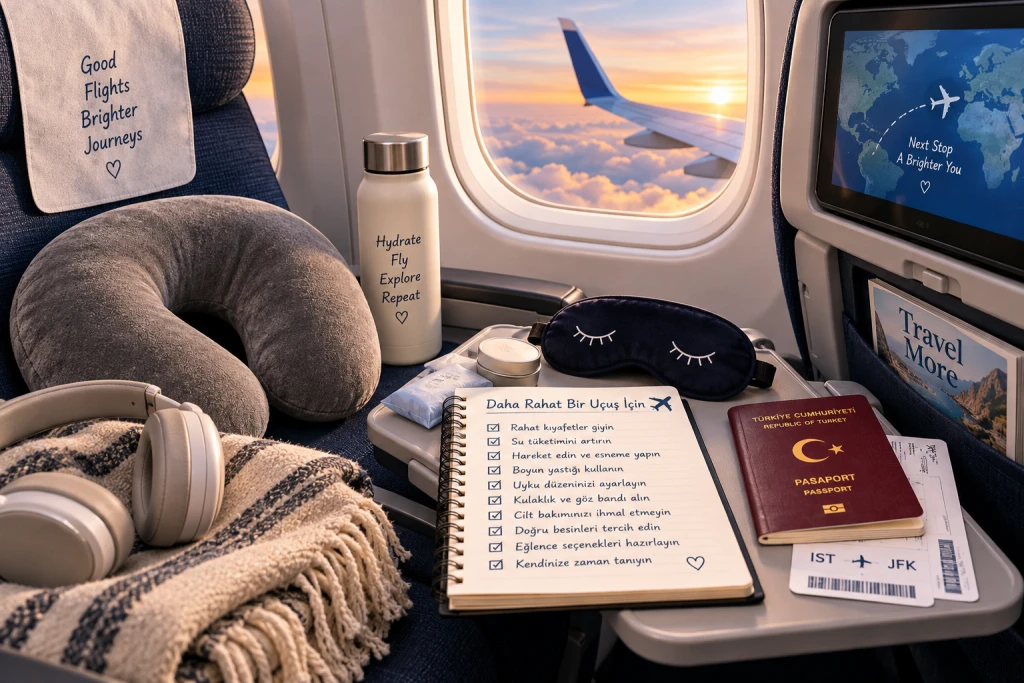
Ways to Feel More Comfortable on Long Flights | 2026 Flight Guide
Flights lasting several hours can be one of the most exhausting parts of a vacation, especially for intercontinental travel. Sitting for long periods in narrow seats, trying to sleep, cabin air quality, jet lag, and staying in the same position for hours can reduce flight comfort.
However, choosing the right seat, wearing comfortable clothes, preparing your carry-on bag wisely, moving around, and making good use of flight time can make long flights much more comfortable.
So how can you feel more comfortable on long flights? What should you do to sleep comfortably on a plane? What should we bring with us on a long flight?
In this guide, you will find 20 practical tips for spending long flights more comfortably, from 5-6 hour flights to intercontinental journeys of 10 hours or more.
What is a Long Flight?
Although there is no single universal definition, travel health sources specifically address trips longer than 4 hours in the context of long-distance travel. Sitting immobile for long periods can increase the risk of blood clots, especially in individuals with certain risk factors.
Therefore, the goal on long flights is not only to relax but also not to forget to move around and properly plan personal needs during the journey.
1. Rest Well Before the Flight
Starting a long flight without enough sleep can make the journey more difficult.
If you have an evening flight, try to get enough rest before traveling.
However, thinking "I'll just sleep on the plane" and exhausting yourself all day is not a good strategy either.
Before the flight:
- Get enough sleep.
- Avoid a heavy schedule.
- Schedule your time so you don't rush to the airport.
- Prepare your travel documents in advance.
- Don't pack your carry-on at the last minute.
A comfortable flight starts before boarding the plane.
2. Choose Your Seat Carefully
Seat selection can significantly affect comfort on long flights.
Window seat
Advantages:
- You can watch the view outside.
- You can rest your head against the window.
- You may be disturbed less while sleeping.
Aisle seat
Advantages:
- You can move around more easily.
- It is easier to reach the restroom.
- You can take short walks in the aisle.
Especially on long flights, if moving around is important to you, an aisle seat might be a practical option. The CDC's travel health guide also highlights the importance of being able to move around during long journeys.
3. Wear Comfortable Clothes
On long flights, comfort is as important as style.
Since you will be sitting in the same position for hours, choose clothes that allow you to move comfortably instead of very tight outfits.
Pieces that could be ideal for flying:
- Comfortable pants
- T-shirt
- Light sweatshirt
- Cardigan
- Comfortable socks
- Easy-to-remove shoes
Since temperatures can change on the plane, dressing in layers might be more convenient.
4. Choose Comfortable Shoes
You may experience discomfort in your feet during long flights.
Therefore, during travel:
- Non-restrictive
- Easy to put on and take off
- Comfortable
choosing a shoe like this might be more comfortable.
If you plan to take off your shoes during the flight, pay attention to cabin hygiene and do not walk barefoot in the aisle.
5. Use a Neck Pillow
When trying to sleep on a plane, having your head fall forward or to the side can cause discomfort in the neck and shoulders.
Therefore, a travel neck pillow can be particularly useful on long flights.
When choosing a neck pillow:
- Ensure it supports your neck
- Make sure it is not too hard
- Check that it is easy to carry
- Ensure it does not take up too much space
take note.
6. Bring an Eye Mask and Earplugs
Falling asleep on a plane is not always easy.
Cabin lights, screens, other passengers, and engine noise can make it difficult to drift off.
Therefore, in your carry-on bag:
- Eyemask
- Earplugs
- Headphones
you can keep these items.
Especially on night flights, these small items can enhance your comfort.
7. Don't Neglect Drinking Water During the Flight
Staying hydrated on long flights can help you feel better.
However, there is an important distinction here: while adequate hydration makes sense for general comfort, the CDC notes that there is no direct evidence that it alone prevents travel-related blood clots.
Therefore:
- Be careful not to become dehydrated.
- Limit alcohol consumption.
- Avoid excessive caffeine intake.
- Evaluate your fluid needs based on your personal condition.
8. Don't Stay Still for Too Long
One of the most important aspects of long flights is reducing immobility.
Especially on trips longer than 4 hours, sitting in the same position for a long time can increase the risk of blood clots in some people. The CDC recommends moving your legs frequently and getting up to walk approximately every 1-2 hours when possible.
Simple movements you can do in your seat:
- Move your ankles.
- Lift and lower your heels.
- Lift and lower your toes.
- Tense and relax your leg muscles.
You can also take a short walk in the aisle when appropriate during the flight.
9. Take Advantage of the Aisle Seat
An aisle seat can be advantageous for passengers who want to move frequently.
It is easier to go to the restroom, stand up, or take a short walk.
Especially in situations such as:
- Long flight
- High water intake
- Necessity to move frequently
- Discomfort from immobility
you can consider choosing an aisle seat.
10. Pack Your Carry-On Bag Smartly
On long flights, it is important to carry items you need in your carry-on bag so they are easily accessible, rather than putting them in your checked baggage.
Items that could be in your carry-on:
- Passport
- Phone
- Charger
- Headphones
- Neck pillow
- Eyemask
- Personal medications
- Travel documents
- Empty or suitable water bottle
- Personal care products
Remember that rules regarding liquids, electronics, and batteries may vary depending on the airport and airline.
11. Carry Your Power Bank in the Right Place
Running out of battery on your phone or other devices during a long flight is an unwanted situation.
A power bank is therefore very useful.
However, airline rules must be followed regarding the transport of power banks and spare lithium batteries. IATA states that such spare batteries must be carried in carry-on luggage.
Always check the current rules of the airline you are flying with before your trip.
12. Avoid Very Heavy Meals on the Plane
Very heavy meals on long flights can make you feel uncomfortable.
Especially before and during the flight:
- Limit overly fatty foods
- Avoid eating more than necessary
- Limit excessive alcohol consumption
can help you feel more comfortable.
You can choose light options that suit your dietary routine.
13. Consume Caffeine at the Right Time
Coffee, tea, and energy drinks can help you stay awake on long flights.
However, if you plan to sleep during the flight, too much caffeine can make it harder to fall asleep.
Especially if you are flying to a destination with a time difference, planning your caffeine intake by considering the local time of your destination can be beneficial.
14. Limit Alcohol
The thought "I'll drink something on the plane and sleep more easily" is a common approach.
However, alcohol can negatively affect sleep quality and make the long flight more uncomfortable.
Also, it should be considered that alcohol consumption during flights where you remain immobile for long periods can lead to additional problems. The CDC states that there is no evidence that alcohol prevents blood clots during long journeys and emphasizes the importance of mobility.
15. Plan Your Sleep Schedule on the Plane in Advance
Whether you sleep or not on a long flight can vary depending on the time of travel.
For example:
Night flight → May be more suitable for sleep.
Day flight → Staying awake may be more logical.
If you are flying to a destination with a few hours of time difference, you can create your sleep plan during the flight by taking into account the local time of your arrival point.
This approach can also make it easier to cope with jet lag.
16. Take Breaks from Screen Use
Looking at your phone or tablet for hours during long flights can strain your eyes.
If you want to watch movies or work, take breaks periodically.
For example:
Movies → short break → music → sleep → walk → book
you can switch between different activities.
This way, you won't have to spend the entire flight doing just one activity.
17. Prepare a Movie and Entertainment List
To make time pass faster on long flights, you can prepare an entertainment list in advance.
On your phone or tablet:
- Movies
- TV Series
- Podcasts
- Music
- E-books
- Audiobooks
you can download.
Especially instead of relying on internet connection, saving content to your device in advance might be safer.
18. Prepare in Advance if You Will Work
Some preparations can be made for those who intend to use long flights for work.
Before the flight:
- Download required files.
- Save important documents offline.
- Charge your computer.
- Prepare your headphones.
- Complete tasks requiring internet in advance.
However, instead of working in the same position for hours throughout the flight, it is important to get up regularly and move your legs. Prolonged immobility is a significant factor in the risk of travel-related blood clots.
19. Don't Sit Cross-Legged for Hours During the Flight
Instead of staying in the same position for a long time, change your posture as much as possible.
Especially:
- Move your ankles.
- Work your leg muscles.
- Stretch your legs occasionally.
- Stand up when appropriate.
The CDC recommends leg exercises and regular movement for passengers who sit for long periods.
20. If You Are Flying Long-Haul for the First Time, Prepare Yourself
If you are taking a flight of 8-10 hours or longer for the first time, do not exaggerate the length of the flight in your mind.
You can divide the flight into smaller sections:
First section
Movie or music.
Second section
Meal and rest.
Third section
Sleep.
Fourth section
Book, movie, or podcast.
Last section
Arrival preparation.
This way, instead of thinking "There are still 8 hours left!", you can evaluate the flight in smaller time blocks.
Items You Should Bring on Long Flights
You can prepare a small flight comfort bag for long flights.
Comfort
- Neck pillow
- Eyemask
- Earplugs
- Comfortable socks
Electronics
- Phone
- Charging cable
- Headphones
- Power bank
Personal care
- Toothbrush
- Toothpaste
- Moisturizer
- Lip balm
- Wet wipes
Documents
- Passport
- Boarding pass
- Hotel information
- Travel insurance
- Emergency contact information
Don't forget to check the liquid and electronic item rules in the cabin bag with the relevant airline and airport before your flight.
Seat Selection for Comfort on Long Flights
SeatAdvantageWho Is It Suitable For?Window | Head support, view | Those who want to sleep |
Aisle | Easy movement | Those who want to get up often |
Middle | Between two passengers | Less preferred |
Extra legroom | More space | Those seeking comfort on long flights |
When choosing a seat, decide not only based on price but also according to flight duration and your personal needs.
10 Golden Rules for Feeling More Comfortable on Long Flights
To summarize briefly:
- Rest well before the flight.
- Wear comfortable clothes.
- Choose your seat according to your needs.
- Use a neck pillow and eyemask.
- Pack your carry-on bag smartly.
- Stay hydrated.
- Don't stay still for too long.
- Do leg and foot exercises.
- Limit alcohol and excessive caffeine.
- Divide the flight into sleep, entertainment, and rest sections.
What Health Precautions Should Be Taken on Long Flights?
Remaining immobile for long periods, especially on trips longer than 4 hours, can increase the risk of blood clots such as deep vein thrombosis (DVT) in some individuals. Although the general risk is low for most travelers, the risk may be higher in individuals with certain risk factors such as a history of clots, recent surgery or injury, pregnancy or postpartum period, certain hormone use, clotting disorders, and some chronic diseases.
Therefore, on long flights:
- Mov your legs regularly.
- Stand up and walk when appropriate.
- Do simple leg exercises in your seat.
- Try not to stay in the same position for too long.
If you have had a blood clot before or think you have a personal risk, you should consult your doctor before the flight. Measures such as compression stockings or medication require personalized medical evaluation; do not self-medicate.
If symptoms such as unexplained leg swelling, pain, warmth, or redness after the flight; shortness of breath, chest pain, fainting, or coughing up blood appear, seek emergency medical help.
Most Common Mistakes on Long Flights
Wearing very tight clothes
Can increase discomfort while sitting for long periods.
Not getting up for hours
Remaining immobile for a long time is especially important for individuals with risk factors.
Putting all important items in checked baggage
Passports, necessary medications, and important documents should be accessible during the flight.
Consuming too much alcohol during the flight
Can cause issues regarding sleep and general comfort.
Choosing the wrong seat
An aisle seat is not always ideal for someone who wants to sleep, nor is a window seat for someone who wants to move frequently.
Not resting beforehand thinking "I'll sleep on the plane"
Can increase fatigue.
Putting the power bank in checked baggage
Airline rules for lithium-powered spare batteries and power banks should be checked; IATA anticipates they be carried in carry-on luggage.
Pre-Flight Checklist for Long Flights
Before boarding the plane:
- Passport
- Boarding pass
- Hotel reservation
- Travel insurance
- Phone
- Charger
- Power bank
- Headphones
- Neck pillow
- Eyemask
- Personal medications
- Personal care products
- Comfortable clothes
- Entertainment content
- Offline documents
- Offline map
should be checked.
Making Long Flights More Comfortable Is in Your Hands
Long flights may seem exhausting at first glance. However, with proper preparation, you can significantly increase the comfort of your journey.
Comfortable clothes, correct seat selection, neck pillow, eyemask, entertainment options, a well-prepared carry-on bag, and regular movement are simple steps that can make a difference on long flights.
Especially on flights longer than 4 hours, it is important to be careful not to remain immobile for long periods. The CDC recommends moving your legs frequently and getting up to walk every 1-2 hours when appropriate.
Remember:
The goal of a long flight is not just to reach your destination, but to arrive there as rested and ready as possible.
Plan Your Long Flight More Comfortably from the Start
You can make your journey more comfortable by evaluating your flight time, layover duration, seat selection, and accommodation plans together.
Determine your travel date → Choose a suitable flight → Plan your seat → Arrange your accommodation → Complete your preparations for the long flight → Enjoy your trip.