


30 Must-Visit Historical Cities in Europe: The Continent's Most Beautiful Cultural Routes
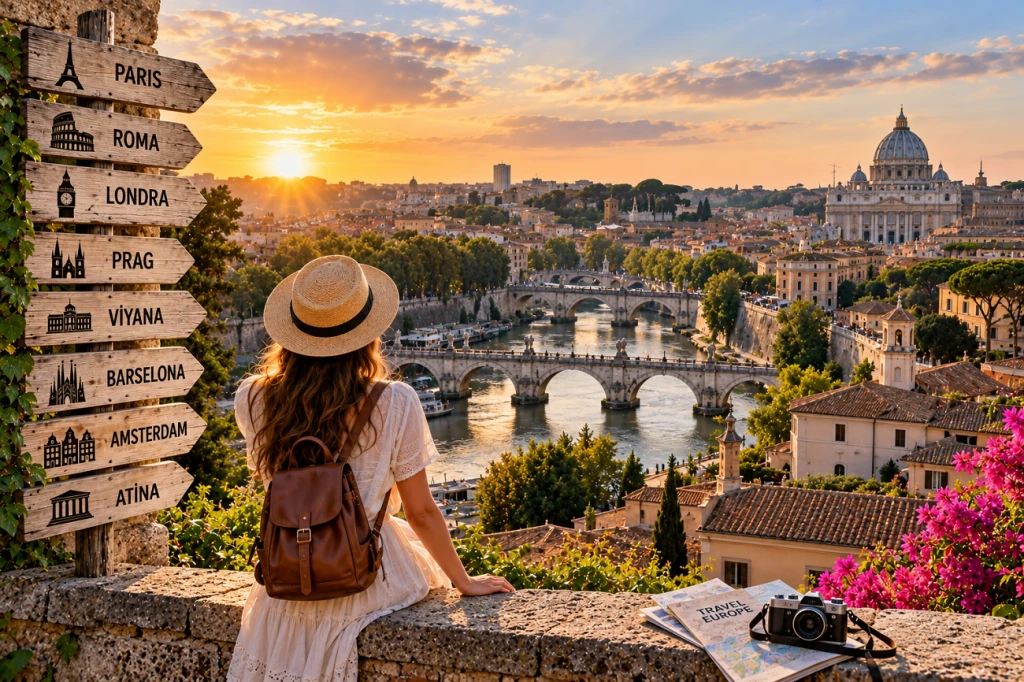
30 Historical Cities You Must Visit in Europe: Europe's Most Beautiful Cultural Routes
Europe has hosted many civilizations over the centuries, from the Roman Empire and Medieval kingdoms to the Renaissance, and the Ottoman and Habsburg heritage. Therefore, historical cities, old town centers, castles, palaces, cathedrals, and museums are found together across different countries on the continent.
Especially, Europe's historical cities are not just monuments; they are vibrant cultural destinations that can be explored through their streets, squares, architecture, gastronomy, and local life. Many European historical cities such as Rome, Prague, Krakow, Vienna, Tallinn, and Dubrovnik are included in UNESCO's World Heritage program.
So, which are the historical cities you must visit in Europe? Which cities should you choose for your first European cultural tour?
Here are Europe's 30 most beautiful historical cities in terms of history, culture, art, and architecture.
1. Rome – Italy
Rome is one of the first stops for those who want to take a historical tour in Europe.
With its nearly three-thousand-year history, the city offers the opportunity to explore Ancient Rome, the Renaissance, Baroque, and Vatican heritage in the same trip.
Places to see in Rome
- Colosseum
- Roman Forum
- Pantheon
- Trevi Fountain
- Vatican
- St. Peter's Basilica
- Sistine Chapel
- Piazza Navona
Rome's historic center is protected under the UNESCO World Heritage list.
Ideal duration: 3–4 days
Highlight: Ancient Roman history
2. Florence – Italy
Florence, as one of the most important cities of the Renaissance, creates a unique route for art and architecture enthusiasts.
Places to see
- Duomo
- Uffizi Gallery
- Ponte Vecchio
- Palazzo Vecchio
- Galleria dell'Accademia
- Piazza della Signoria
Ideal duration: 2–3 days
Highlight: Renaissance art
3. Venice – Italy
With its canals, historic palaces, and St. Mark's Square, Venice is one of Europe's most unique historical cities.
Getting lost on foot in the city is an experience in itself.
Places to see
- St. Mark's Square
- St. Mark's Basilica
- Doge's Palace
- Rialto Bridge
- Grand Canal
- Burano
- Murano
Venice and its lagoon are on the UNESCO World Heritage list.
Ideal duration: 2–3 days
Highlight: Canals and historic urban fabric
4. Paris – France
Paris is one of the essential addresses for those who want to experience art, history, architecture, and gastronomy all at once.
Places to see in Paris
- Louvre Museum
- Eiffel Tower
- Notre-Dame
- Montmartre
- Sacré-Cœur
- Champs-Élysées
- Versailles
The banks of the Seine River in Paris are included in the UNESCO World Heritage list.
Ideal duration: 4–5 days
Highlight: Art and French culture
5. Prague – Czech Republic
Prague is one of the European cities that still strongly preserves its Medieval atmosphere today.
In the historic center, it is possible to see architectural examples from Gothic, Baroque, and various other periods together. UNESCO also describes Prague's historic center as an important architectural heritage area ranging from the Middle Ages to modernism.
Places to see
- Prague Castle
- Charles Bridge
- Old Town Square
- Astronomical Clock
- St. Vitus Cathedral
- Josefov
Ideal duration: 2–3 days
Highlight: Medieval architecture
6. Vienna – Austria
Vienna presents the legacy of the Habsburg Empire, Baroque palaces, and classical music culture together.
Traces of Medieval, Baroque, and 19th-century architecture can be seen in the historic center. UNESCO evaluates Vienna's historic center as one of the important witnesses of Europe's political, cultural, and musical development.
Places to see
- Schönbrunn Palace
- Hofburg Palace
- Belvedere
- St. Stephen's Cathedral
- Ringstrasse
- Vienna State Opera
Ideal duration: 3 days
Highlight: Imperial history and art
7. Barcelona – Spain
Barcelona is a unique European city that combines classic historic fabric with Gaudí's extraordinary architecture.
Places to see
- Sagrada Familia
- Park Güell
- Casa Batlló
- Casa Milà
- Barrio Gótico (Gothic Quarter)
- La Rambla
Ideal duration: 3–4 days
Highlight: Gaudí and Catalan culture
8. Seville – Spain
One of the most important cities of Andalusian culture, Seville is one of the destinations that anyone interested in a cultural and historical tour in Spain must consider.
Places to see
- Seville Cathedral
- Giralda
- Real Alcázar
- Plaza de España
- Santa Cruz Neighborhood
Ideal duration: 2–3 days
Highlight: Andalusian architecture
9. Granada – Spain
Granada is one of the cities carrying the most important traces of Islamic civilization in Spain.
The city's most important symbol, the Alhambra Palace, makes Granada one of Europe's most impressive cultural routes.
Places to see
- Alhambra Palace
- Generalife Gardens
- Albaicín
- Granada Cathedral
- Mirador de San Nicolás
Ideal duration: 2 days
Highlight: Andalusian and Islamic architecture
10. Athens – Greece
One of the most important historical centers of Western civilization, Athens is essential for those who want to explore ancient Greek history on site.
Places to see
- Acropolis
- Parthenon
- Acropolis Museum
- Ancient Agora
- Plaka
- Monastiraki
Among Greece's UNESCO World Heritage sites are important cultural areas such as the Acropolis, Delphi, and Olympia.
Ideal duration: 2–3 days
Highlight: Ancient Greece
11. Dubrovnik – Croatia
Located on the Adriatic coast, Dubrovnik is one of Europe's most impressive cities thanks to its walled historic center.
Its stone streets, historic walls, and sea views make the city particularly attractive during the summer months.
Dubrovnik's historic city is on the UNESCO World Heritage list.
Ideal duration: 2–3 days
Highlight: Medieval walls and the Adriatic
12. Krakow – Poland
Krakow is one of Poland's most important historical cities.
With Wawel Castle, its historic square, and the Kazimierz district, you can discover cultural heritages from different periods in the city.
UNESCO describes Krakow's historic center as one of the important examples of Medieval urban planning.
Places to see
- Wawel Castle
- Rynek Główny (Main Market Square)
- St. Mary's Church
- Kazimierz
- Cloth Hall
Ideal duration: 2–3 days
Highlight: Medieval and Polish history
13. Budapest – Hungary
Rising on both banks of the Danube River, Budapest is one of the important cultural cities of Central Europe with its historic buildings and magnificent architecture.
Places to see
- Buda Castle
- Parliament Building
- Fisherman's Bastion
- Chain Bridge
- St. Stephen's Basilica
- Gellért Hill
Ideal duration: 2–3 days
Highlight: Danube and Habsburg heritage
14. Lisbon – Portugal
Lisbon is one of Europe's characteristic cities with its historic trams, colorful neighborhoods, hills, and maritime history.
Places to see
- Belém Tower
- Jerónimos Monastery
- Alfama
- Praça do Comércio
- São Jorge Castle
- LX Factory
Ideal duration: 3 days
Highlight: Portuguese maritime history
15. Porto – Portugal
Porto, located on the banks of the Douro River, stands out with its traditional architecture and wine culture in addition to its historic center.
The historic center, Luiz I Bridge, and Serra do Pilar Monastery are within the UNESCO World Heritage scope.
Ideal duration: 2–3 days
Highlight: Historic city + gastronomy
16. Bruges – Belgium
With its canals and architecture dating back to the Middle Ages, Bruges looks like an open-air museum.
Places to see
- Market Square
- Belfry Tower
- Burg Square
- Basilica of the Holy Blood
- Canals
Ideal duration: 1–2 days
Highlight: Medieval urban fabric
17. Amsterdam – Netherlands
Amsterdam's canals, historic houses, and museums give the city a special position in terms of cultural tours.
Places to see
- Canal Ring
- Rijksmuseum
- Van Gogh Museum
- Anne Frank House
- Dam Square
- Jordaan
Ideal duration: 2–3 days
Highlight: Canal architecture and art
18. Berlin – Germany
Berlin is one of the most important cities for understanding Europe's recent history.
In the city, you can see traces of different periods such as Prussia, World War II, the Cold War, and the Berlin Wall in the same trip.
Places to see
- Brandenburg Gate
- Reichstag
- Berlin Wall
- Museum Island
- Checkpoint Charlie
- Berlin Cathedral
Ideal duration: 3–4 days
Highlight: Recent European history
19. Munich – Germany
Munich is one of Germany's important cities with its Bavarian culture and historic buildings.
Places to see
- Marienplatz
- Neues Rathaus
- Nymphenburg Palace
- Frauenkirche
- Residenz
- Viktualienmarkt
Ideal duration: 2–3 days
Highlight: Bavarian culture
20. Salzburg – Austria
Salzburg also stands out with its place in music history as the birthplace of Mozart.
You can combine culture and nature holidays with its Baroque architecture, historic center, and location surrounded by the Alps.
Ideal duration: 2 days
Highlight: Mozart and Baroque architecture
21. Edinburgh – Scotland
Scotland's capital, Edinburgh, is a very impressive city with its castle, historic streets, and Medieval fabric.
Places to see
- Edinburgh Castle
- Royal Mile
- Holyrood Palace
- St Giles' Cathedral
- Arthur's Seat
Edinburgh's Old Town and New Town districts are included in the UNESCO World Heritage list.
Ideal duration: 2–3 days
Highlight: Castle and Medieval atmosphere
22. Stockholm – Sweden
Stockholm is one of the important cultural destinations of Scandinavia with its historic structure built on islands and its Gamla Stan district.
Places to see
- Gamla Stan
- Stockholm Royal Palace
- Vasa Museum
- Stockholm Cathedral
- Stortorget
Ideal duration: 2–3 days
Highlight: Scandinavian history
23. Tallinn – Estonia
One of the best-preserved Medieval cities of the Baltics, Tallinn stands out with its narrow streets, walls, and historic buildings.
UNESCO describes Tallinn's historic center as one of the extremely well-preserved examples of Medieval Northern European trading cities.
Places to see
- Toompea
- Alexander Nevsky Cathedral
- Town Hall Square
- City Walls
- Kadriorg Palace
Ideal duration: 2 days
Highlight: Medieval Baltic culture
24. Riga – Latvia
Riga is one of the important cultural cities of the Baltics with its historic center and especially its Art Nouveau architecture.
Places to see
- Riga Old Town
- House of the Blackheads
- Riga Cathedral
- Freedom Monument
- Art Nouveau District
Ideal duration: 2 days
Highlight: Art Nouveau and Baltic culture
25. Ljubljana – Slovenia
Small and easy to explore on foot, Ljubljana appeals to those looking for a quiet European cultural route with its historic center, riverbank, and castle views.
Places to see
- Ljubljana Castle
- Prešeren Square
- Triple Bridge
- Old Town
- Dragon Bridge
Ideal duration: 1–2 days
Highlight: Historic center + city walk
26. Mostar – Bosnia and Herzegovina
Mostar is one of the cities that must be considered when talking about a historical and cultural tour in the Balkans.
The city's symbol, the Mostar Bridge, is included in the UNESCO World Heritage list along with the historic center.
Places to see
- Mostar Bridge
- Old Bazaar
- Koski Mehmed Pasha Mosque
- Neretva River
- Historic City Center
Ideal duration: 1–2 days
Highlight: Ottoman and Balkan heritage
27. Kotor – Montenegro
Kotor, located on the Adriatic coast, has a unique atmosphere with its walled historic center and bay surrounded by mountains.
Kotor's natural and cultural-historical region is on UNESCO's World Heritage list.
Places to see
- Kotor Old Town
- Museum of Maritime History
- St. Tryphon Cathedral
- City Walls
- Kotor Fortress
Ideal duration: 1–2 days
Highlight: Medieval + Adriatic
28. A Different Adriatic Route from Dubrovnik: Split – Croatia
Split stands out with its historic city structure developed around the palace of Roman Emperor Diocletian.
Places to see
- Diocletian's Palace
- Peristyle Square
- St. Domnius Cathedral
- Riva
- Old Town
Split's historic complex is on the UNESCO World Heritage list.
Ideal duration: 2 days
Highlight: Roman heritage
29. Bern – Switzerland
Switzerland's capital, Bern, is a very enjoyable destination for cultural tours with its urban fabric that has survived from the Middle Ages to the present day.
Places to see
- Bern Old Town
- Zytglogge
- Federal Parliament
- Bern Cathedral
- Aare River
Ideal duration: 1–2 days
Highlight: Medieval city architecture
30. Toledo – Spain
With its proximity to Madrid, Toledo is one of the historical cities that can easily be added to a short European cultural tour.
Throughout the centuries, the city where different cultures lived together carries the architectural traces of Christian, Jewish, and Islamic civilizations.
Places to see
- Toledo Cathedral
- Alcázar
- Jewish Quarter
- El Greco Museum
- Monastery of San Juan de los Reyes
UNESCO lists Toledo as one of the historical cities carrying traces of different cultural and religious traditions.
Ideal duration: 1–2 days
Highlight: Multicultural history
Best Routes for a Historical Tour in Europe
If you want to see several historical cities in the same trip instead of just one, city combinations can be quite advantageous.
🇮🇹 Italy Historical Route
Rome → Florence → Venice
Ancient Rome + Renaissance + Venice.
🇪🇸 Spain Historical Route
Madrid → Toledo → Córdoba → Seville → Granada
A strong route for those who want to explore different periods of Spain.
🇨🇿🇦🇹 Central Europe Route
Prague → Vienna → Budapest
For those who want to explore the historical cities of Central Europe in a single trip.
🇭🇷🇧🇦 Balkan Historical Route
Dubrovnik → Mostar → Kotor → Split
Combines the Adriatic, the Balkans, and Ottoman heritage.
🇵🇹 Portugal Route
Lisbon → Sintra → Porto
Historic cities, palaces, and Atlantic culture.
Best Cities for First-Time European Cultural Tours
If you are planning your first European cultural tour, the following cities could be a good starting point:
Rome: Ancient history and art
Paris: Museums and architecture
Prague: Medieval atmosphere
Vienna: Palaces and classical music
Barcelona: Architecture and city culture
Athens: Ancient Greece
Budapest: Historic city and Danube
Lisbon: History and local life
Best Time to Visit Historical Cities in Europe
Spring – April, May, June
Generally offers milder weather conditions for city tours.
Summer – July, August
The long days are an advantage. However, visitor density may increase, especially in popular historical cities.
Autumn – September, October
This is a very pleasant period for cultural tours. Air temperatures may be more comfortable in many cities.
Winter – November, December, January, February
Christmas markets and winter atmosphere can turn cities like Prague, Vienna, Budapest, Berlin, and Strasbourg into a different experience.
What to Keep in Mind When Taking a Historical City Tour in Europe?
1. Don't rush through the cities
Instead of spending only a few hours in a city, staying overnight for at least 1–2 nights can offer a better experience.
2. Choose central accommodation
Hotels near historic centers offer advantages, especially for those who want to explore the city on foot.
3. Check museum and palace tickets
Advance reservations may be required for popular museums and historic sites.
4. Evaluate city cards
Some European cities offer city cards that provide access to museums, public transport, and tourist attractions.
5. Be prepared for walking
It is possible to explore most historical cities on foot. Therefore, comfortable shoes are an important travel item.
Which City Should You Choose for a History and Culture Tour in Europe?
Ancient History: Rome, Athens, Split
Renaissance: Florence
Medieval: Prague, Bruges, Tallinn, Krakow
Andalusia: Seville, Granada, Toledo
Imperial History: Vienna, Budapest
Art: Paris, Florence, Amsterdam
Ottoman and Balkan Heritage: Mostar, Kotor
Adriatic History: Dubrovnik, Split, Kotor
Short Weekend Cultural Tour: Prague, Bruges, Vienna, Budapest, Mostar
Long European Cultural Tour: Italy or Spain routes
Are You Ready to Explore Europe's Historical Cities?
Visiting historical cities in Europe is much more than just seeing old buildings. Walking through a city's streets, drinking coffee in its squares, visiting its museums, tasting local dishes, and discovering its cultural heritage formed over centuries makes the trip unforgettable.
From Rome's ancient heritage to Florence's Renaissance art, from Prague's Medieval streets to Granada's Andalusian architecture, there are hundreds of historical routes to explore in Europe. The list of UNESCO World Heritage cities also reveals the breadth of this cultural richness.
Plan Your Reservation Now for a Historical European Tour
Select your city → Set your travel date → Compare flight and hotel options → Create your museum and tour program → Complete your reservation.
Don't delay your trip to explore the history-scented streets of Europe!