


The Most Impressive Ancient Cities of the World
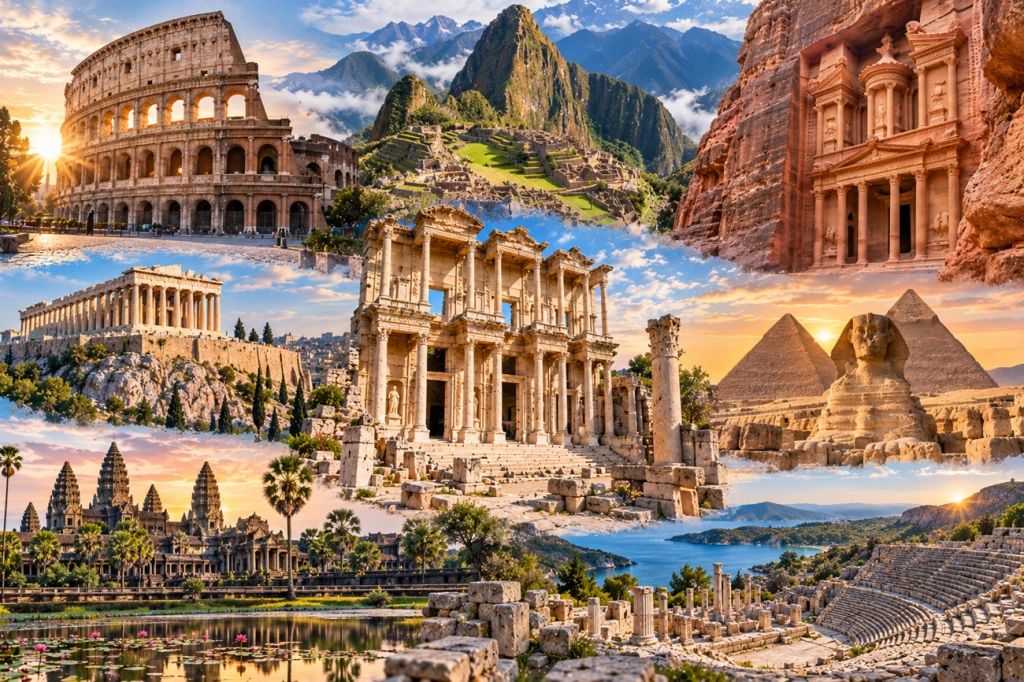
The World's Most Impressive Ancient Cities: 20 Must-Visit Ancient Sites
Ancient cities established thousands of years ago in different regions of the world carry the lifestyle, architecture, beliefs, and daily life of past civilizations to the present day. Some ancient cities impress visitors with their massive temples, others with their theaters and agoras, while some captivate with structures carved into rock.
The world's most impressive ancient cities offer unique routes not only for history and archaeology enthusiasts but also for travelers seeking cultural tours.
Stretching from Turkey to Italy, Greece to Jordan, and Mexico to Peru, these routes create inspiring options for those who want to discover different civilizations in a single travel plan.
So, which are the world's most beautiful ancient cities? Here are 20 ancient cities you must see.
1. Ephesus Ancient City – Turkey
Ephesus Ancient City, located in Selçuk district of Izmir, is one of the most important historical sites that can be listed among the world's most impressive ancient cities.
Carrying traces of the Hellenistic and Roman periods, Ephesus stands out with monumental structures such as the Library of Celsus, the Great Theater, the Temple of Hadrian, and the Hillside Houses.
The history of the ancient city is not limited to the Roman period. There are even older settlement traces in the region where Ephesus is located. UNESCO evaluates Ephesus as an important archaeological site carrying the cultural heritage of different periods together.
Must-See in Ephesus
- Library of Celsus
- Great Theater
- Marmara Street (Marble Street)
- Temple of Hadrian
- Hillside Houses
- Church of the Virgin Mary
- Ancient Harbor
- Ruins of the Temple of Artemis
Suggested visit duration: 1 day
You can create a comprehensive Aegean culture tour by combining your Ephesus visit with House of the Virgin Mary, Selçuk, and Şirince.
2. Petra Ancient City – Jordan
One of the most famous ancient cities in the world with its rock-carved structures, Petra is Jordan's most important tourist destination.
Petra, the capital of the Nabataeans, was an important trade center that developed in the middle of the desert landscape.
The city features tombs, temples, monumental structures, and water management systems carved into the rock. UNESCO describes Petra as an extraordinary archaeological site where Eastern traditions meet Hellenistic architecture.
Must-See in Petra
- Al-Khazneh (The Treasury)
- The Siq
- Royal Tombs
- The Monastery
- Ancient Theater
- Colonnaded Street
Suggested visit duration: 1-2 days
Petra tours can generally be planned together with Amman and Wadi Rum.
3. Pompeii – Italy
Pompeii, buried under ash and volcanic material following the eruption of Mount Vesuvius in 79 AD, is one of the archaeological sites where you can observe ancient Roman life most impressively.
Houses, shops, baths, theaters, and public buildings in the city are largely preserved.
UNESCO states that Pompeii is a unique archaeological site showing ancient Roman urban life in an extremely comprehensive manner.
Must-See in Pompeii
- Forum
- Arena (Amphitheater)
- Great Theater
- Baths
- Villa of the Mysteries
- Ancient houses and frescoes
Suggested visit duration: 1 day
Visiting Pompeii together with Naples, Herculaneum, and Mount Vesuvius creates a very impressive Italy route.
4. Acropolis – Athens, Greece
The symbol of Athens, the Acropolis, is one of the most important architectural complexes of Ancient Greek civilization.
The Parthenon, Erechtheion, Propylaia, and Temple of Athena Nike located on the hill are among the most famous examples of classical Greek architecture.
UNESCO describes the Acropolis of Athens as one of the most striking and intact monumental complexes surviving from the classical Greek world to the present day.
Must-See at the Acropolis
- Parthenon
- Erechtheion
- Propylaia
- Temple of Athena Nike
- Acropolis Theater
Suggested visit duration: Half day – 1 day
In Athens, you can combine your Acropolis visit with the Acropolis Museum, Ancient Agora, and Plaka.
5. Machu Picchu – Peru
Located high in the Andes Mountains, Machu Picchu is one of the world's most impressive archaeological sites.
Showcasing the architectural achievement of the Inca civilization, the city has a unique appearance with its location among mountains, stone craftsmanship, and terraces.
Machu Picchu is a unique destination especially for travelers who want to combine nature and history tourism.
What to See at Machu Picchu
- Temple of the Sun
- Holy Rock
- Inca houses
- Agricultural terraces
- Royal sector
- Ancient paths
Suggested visit duration: 1-2 days
Machu Picchu trips are generally planned together with Cusco and the Sacred Valley.
6. Angkor – Cambodia
Angkor in Cambodia is one of the most impressive historical complexes in Southeast Asia.
Known especially for the Angkor Wat temple, the region reveals the architectural and cultural power of the Khmer Empire.
Angkor does not consist of just a single structure. It features temples, roads, water structures, and historical ruins spread over a wide area.
Must-See at Angkor
- Angkor Wat
- Bayon
- Ta Prohm
- Angkor Thom
- Banteay Kdei
Suggested visit duration: 2-3 days
The most suitable accommodation center for an Angkor trip is usually Siem Reap.
7. Teotihuacan – Mexico
Located near Mexico City, Teotihuacan is one of the most impressive pre-Columbian American ancient cities.
The city stands out especially with its massive pyramids and geometric city planning.
According to UNESCO, Teotihuacan developed between the 1st and 7th centuries AD and became one of the strongest cultural centers of Mesoamerica.
Must-See at Teotihuacan
- Pyramid of the Sun
- Pyramid of the Moon
- Avenue of the Dead
- Temple of Quetzalcoatl
- Palace complexes
Suggested visit duration: 1 day
It can be visited as a day trip during a Mexico City trip.
8. Delphi – Greece
One of the most important religious centers of the ancient Greek world, Delphi is known especially for the Temple of Apollo and its oracle center.
Located in a mountainous geography, the city stands out not only with its historical structures but also with its natural landscapes.
Must-See at Delphi
- Temple of Apollo
- Ancient Theater
- Stadium
- Temple of Athena Pronaia
- Delphi Archaeological Museum
Suggested visit duration: 1 day
It can be an important stop on cultural tours departing from Athens.
9. Baalbek – Lebanon
Baalbek in Lebanon is home to some of the most magnificent temple complexes of the Roman period.
The city stands out with its massive stone blocks and monumental columns, showcasing the power of Roman architecture.
Especially the ruins of the Temple of Jupiter are quite impressive for understanding the engineering capacity of the ancient world.
Suggested visit duration: 1 day
10. Hattusa – Turkey
Hattusa in Çorum is one of the most important ancient cities in Anatolian history as the capital of the Hittite Empire.
The city contains temples, walls, monumental gates, and rock reliefs.
Must-See at Hattusa
- Lion Gate
- King's Gate
- Great Temple
- Yazılıkaya
- City walls
Suggested visit duration: 1 day
Hattusa is an important route for those who want to take cultural tours about Anatolian civilizations.
11. Hierapolis – Turkey
Hierapolis Ancient City in Denizli is one of Turkey's most impressive historical and natural destinations along with the travertines of Pamukkale.
The theater, necropolis, ancient streets, and religious structures remaining from the Roman period are the notable sections of the city.
The biggest advantage of Hierapolis is that it offers the opportunity to explore a historical ancient city and a natural world heritage in the same trip.
Suggested visit duration: 1 day
12. Pergamon – Turkey
Pergamon in Bergama district of Izmir is one of the most important centers of Hellenistic period history.
The high location of the Acropolis and its impressive ancient theater make the city one of the most striking archaeological sites in Turkey.
Must-See at Pergamon
- Acropolis
- Ancient Theater
- Temple of Trajan
- Temple of Athena
- Asclepieion
- Red Courtyard
Suggested visit duration: 1 day
Pergamon can be combined with Ephesus and Sardes to create a strong Aegean ancient cities tour.
13. Jerash – Jordan
Jerash in Jordan is an important ancient city known for its colonnaded streets, squares, and theaters remaining from the Roman period.
In the city, it is possible to see how Roman architecture reflected in daily life.
What to See at Jerash
- Oval Square
- Colonnaded Street
- Temple of Artemis
- Temple of Zeus
- Southern Theater
- Hadrian's Arch
Suggested visit duration: Half day – 1 day
14. A Different Roman City from Ephesus: Leptis Magna – Libya
Leptis Magna in North Africa is considered one of the most important cities of Rome in Africa.
The city features large forums, basilicas, theaters, baths, and colonnaded streets.
Showcasing the importance of Mediterranean trade in the Roman world, the city is an unusual destination for archaeology enthusiasts.
Suggested visit duration: 1 day
15. Ostia Antica – Italy
Ostia Antica, the ancient port of Rome, is an important archaeological site for understanding the daily life of ancient Rome.
Although less famous than Pompeii, it offers quite valuable remains regarding the commercial and social life of ancient Rome.
It can be evaluated as a day trip during a Rome visit.
Suggested visit duration: Half day – 1 day
16. After Delphi: Olympia – Greece
Known as the birthplace of the Ancient Olympic Games, Olympia is one of the important archaeological centers of Greece.
The city contains structures such as the Temple of Zeus, the Temple of Hera, and the ancient stadium.
What to See at Olympia
- Temple of Zeus
- Temple of Hera
- Ancient Stadium
- Gymnasium
- Olympia Archaeological Museum
Suggested visit duration: 1 day
17. Aphrodisias – Turkey
Aphrodisias, located in Karacasu district of Aydın, stands out especially as one of the important centers of ancient sculpture art.
Traces of marble craftsmanship and sculpting tradition can still be seen in the city today.
Must-See at Aphrodisias
- Sebasteion
- Tetraphylon
- Stadium
- Theater
- Agora
- Temple of Aphrodite
Suggested visit duration: Half day – 1 day
Aphrodisias can be added to Pamukkale and Ephesus routes to create a comprehensive Western Anatolia culture tour.
18. Chichén Itzá – Mexico
Located on the Yucatán Peninsula, Chichén Itzá is one of the most famous archaeological centers of the Maya civilization.
The city's most famous structure is the Kukulkan Pyramid, also known as El Castillo.
Additionally, a large ball court, temples, and columned structures can be seen.
Suggested visit duration: 1 day
Chichén Itzá can be combined with Cancún and Riviera Maya trips in Mexico.
19. Between Baalbek and Petra: Palmyra – Syria
One of the important trade centers of the ancient world, Palmyra has always been of great importance throughout history as an impressive ancient city that developed in the middle of the desert.
The city stands out with its colonnaded streets, temples, and tomb structures, making it one of the important archaeological heritages of the Middle East.
Note: Due to current security conditions in the region, official travel warnings must definitely be checked before planning a trip.
20. Rome – Italy
Rome needs to be given a separate place among the world's most impressive ancient cities.
Rome is not just a single ancient city but a vast historical area where the modern city and the ancient world intertwine.
Ancient Structures to See in Rome
- Colosseum
- Roman Forum
- Palatine Hill
- Pantheon
- Circus Maximus
- Caracalla Baths
Visitors to Rome can see different traces of ancient Rome's political, religious, and social life in a single trip.
Suggested visit duration: 3-4 days
In Which Countries Are the World's Best Ancient Cities Located?
Among the countries richest in ancient cities, especially Turkey, Italy, Greece, Mexico, Jordan, Egypt, and Peru stand out.
Turkey
It has important archaeological sites belonging to very different periods such as Ephesus, Pergamon, Aphrodisias, Hattusa, Hierapolis, Troy, and Göbekli Tepe.
Italy
It hosts important centers of the Roman period such as Rome, Pompeii, Herculaneum, and Ostia Antica.
Greece
With the Acropolis of Athens, Delphi, Olympia, and other ancient centers, it is one of the most important routes of Ancient Greek history.
Mexico
It possesses impressive centers like Chichén Itzá and Teotihuacan belonging to the Maya and other Mesoamerican civilizations.
Jordan
Petra and Jerash are among Jordan's most important historical and archaeological destinations.
Peru
Machu Picchu is one of the most famous heritages of the Inca civilization.
Best Routes for Ancient City Tours
It is not possible to see all ancient cities in the world in a single trip. Instead, it is more logical to create routes that bring together ancient cities in specific regions.
Turkey Ancient Cities Route
Izmir → Ephesus → Bergama → Aphrodisias → Pamukkale → Hierapolis
This route brings together the most important archaeological centers of the Aegean and Western Anatolia.
Italy Ancient Rome Route
Rome → Ostia Antica → Naples → Pompeii → Herculaneum
This is a strong culture tour for those who want to closely explore the history of the Roman Empire.
Greece Ancient Cities Route
Athens → Delphi → Olympia
This could be an ideal option for those who want to explore Ancient Greek history and architecture.
Jordan History Route
Amman → Jerash → Petra → Wadi Rum
This brings together history, archaeology, and desert experience in the same trip.
Mexico Ancient Civilizations Route
Mexico City → Teotihuacan → Yucatán → Chichén Itzá
This is an impressive program for those who want to discover different civilizations of Mesoamerica.
Best Time to Visit Ancient Cities
Since a significant portion of ancient cities are open-air areas, the timing of the trip is very important.
Generally, spring and autumn months may be more comfortable for culture tours requiring long periods of walking outdoors.
Especially:
- April
- May
- September
- October
months can be evaluated for many destinations.
During summer months, it may be more comfortable to visit ancient cities in the Mediterranean, Aegean, and Middle East early in the morning.
What Should Be Considered When Planning an Ancient City Tour?
Ancient city visits may require more walking compared to museum or city tours.
Before traveling:
- Choose comfortable walking shoes.
- Use hats and sunscreen during summer months.
- Carry enough water with you.
- Check visiting hours in advance.
- Evaluate guided tours.
- Check entrance conditions for the archaeological site.
- Plan ancient cities in the same region within the same trip.
- Select your accommodation based on travel time.
- Make hotel and transport reservations early during peak seasons.
Why Is It Advantageous to Explore Ancient Cities with Guided Tours?
Many structures found in ancient cities exist today only as ruins. Therefore, tours conducted with a guide can make the past functions of the structures and the history of the city more understandable.
For example, instead of just seeing the Library of Celsus in Ephesus, learning about the city's trade life, its harbor, and its city planning during the Roman period can make the trip much more meaningful.
Similarly, professional guidance can enrich the travel experience in historically dense destinations like Petra, Pompeii, Rome, or Cappadocia.
The World's Most Impressive Ancient Cities: Conclusion
Ancient cities located in different regions of the world show how rich and diverse human history is.
Destinations such as Ephesus, Petra, Pompeii, the Acropolis, Machu Picchu, Angkor, Teotihuacan, Hattusa, Hierapolis, Pergamon, and Rome are among the world's most striking travel routes in terms of architecture, history, archaeology, and culture.
Turkey, in particular, is a very strong destination in terms of ancient cities. It is possible to see traces of different civilizations in the same country, from Ephesus's Hellenistic and Roman heritage to Hattusa's Hittite history, from Pergamon's Hellenistic past to Hierapolis's Roman period.
UNESCO's evaluation for Ephesus also reveals that the city reflects the cultural traditions of the Hellenistic, Roman Empire, and early Christian periods in the same area.
Plan Your Trip to Discover the Ancient Cities of the World
If you want to explore historical cities and ancient civilizations, you can plan your trip as a regional culture and archaeology tour rather than limiting it to a single destination.
Select your destination → Identify ancient cities → Plan your transportation → Choose your hotel → Add guided tours or daily activities → Complete your reservation.
Plan your next trip now to see thousands of years of history in person, follow the traces of past civilizations, and have an unforgettable cultural experience.