


Turkey's Most Impressive Museums
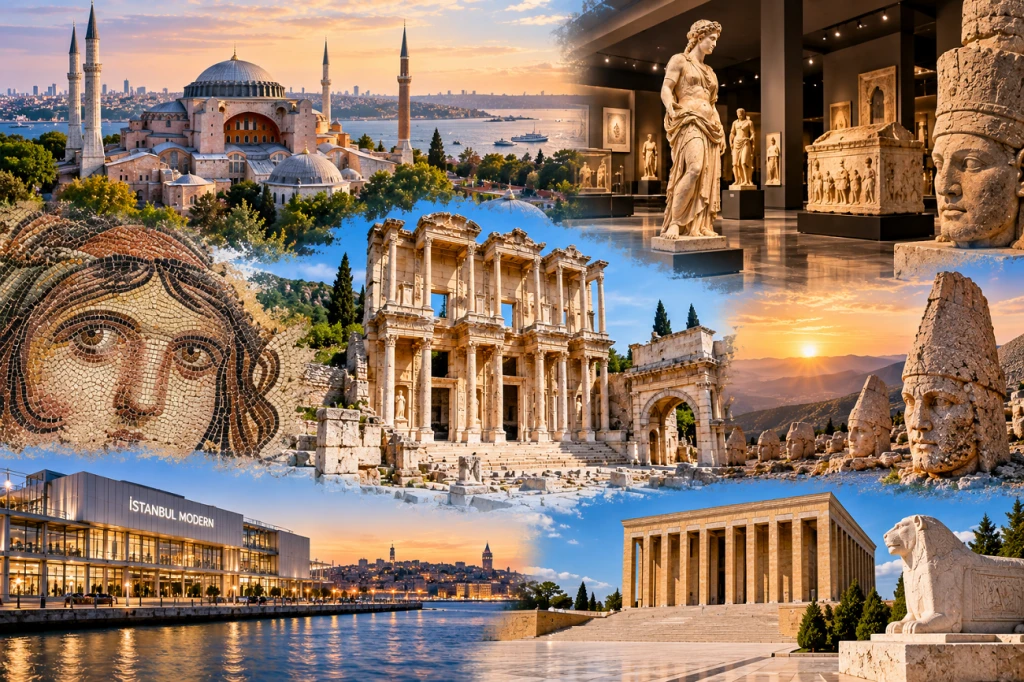
Turkey's Most Impressive Museums: 20 Must-Visit Museums
Turkey is a unique country that has hosted many civilizations throughout its thousands of years of history, from the Hittites to Rome, from Byzantium to the Ottoman Empire. This rich history is carried forward to the present day through artifacts exhibited in museums across Turkey.
Turkey's most impressive museums offer different experiences not only to those who want to see historical artifacts but also to everyone interested in archaeology, art, culture, and the history of civilization.
From Istanbul to Ankara, from Gaziantep to Izmir, from Antalya to Sanliurfa, there are many important museums to discover in Turkey. Moreover, visiting some museums can serve as a great starting point for exploring historical structures and tourist spots in the same city.
So, which are the must-visit museums in Turkey? Here are Turkey's 20 most remarkable museums.
1. Museum of Anatolian Civilizations – Ankara
The Museum of Anatolian Civilizations, one of Turkey's most important archaeology museums, offers the opportunity to explore the thousands of years of Anatolia's history chronologically.
Exhibiting artifacts from various periods starting from the Paleolithic Age, the museum is an important stop for those who wish to get to know the civilizations that lived in Anatolia up close.
In the museum, especially;
- Hittite artifacts
- Frigian period artifacts
- Urartian artifacts
- Roman period finds
- Neolithic period artifacts
stand out.
You can combine your museum visit in Ankara with Ankara Castle and the historic city center. The Ministry of Culture and Tourism also lists the Museum of Anatolian Civilizations among its highlighted museums.
Ideal for whom? Archaeology and history enthusiasts.
2. Istanbul Archaeology Museums – Istanbul
The Istanbul Archaeology Museums are an important museum complex that houses different collections rather than being a single museum.
Within the complex;
- Archaeology Museum
- Museum of Ancient Oriental Art
- Çinili Köşk Museum (Tiled Kiosk Museum)
are located.
Many historical artifacts belonging to Anatolia, Mesopotamia, Egypt, and other civilizations can be seen in these museums.
The museum, located on the historic peninsula of Istanbul, can easily be included in sightseeing routes around Topkapi Palace, Gülhane Park, Hagia Sophia, and Sultanahmet.
Ideal for whom? Those interested in history, archaeology, and the history of civilizations.
3. Zeugma Mosaic Museum – Gaziantep
One of Gaziantep's most important tourist attractions, the Zeugma Mosaic Museum, stands out with its impressive mosaics from the Roman period.
One of the museum's most famous works, the Gypsy Girl Mosaic, is among Turkey's best-known archaeological artifacts.
During your museum visit, you can closely examine mosaics reflecting the daily life, mythological stories, and artistic understanding of the Roman period.
Your trip to Gaziantep can be planned as;
Zeugma Mosaic Museum + Gaziantep Castle + Bakırcılar Bazaar + gastronomy stops
.
Ideal for whom? Enthusiasts of archaeology, mosaic art, and Roman history.
4. Ephesus Museum – Izmir
The Ephesus Museum, located in Selçuk district of Izmir, hosts many important artifacts excavated from the ancient city of Ephesus.
Among the museum's highlight pieces are statues of Ephesian Artemis, Eros statues, various Roman period statues, coins, and jewelry.
While visiting the Ephesus Museum, on the same day you can also explore important sites such as;
- Ephesus Ancient City
- House of the Virgin Mary
- Basilica of St. John
- Ayasuluk Hill
.
Ephesus is an important historical center listed on the UNESCO World Heritage List.
Ideal for whom? Those who want to take history, archaeology, and cultural tours.
5. Antalya Museum – Antalya
The Antalya Museum is an important stop for those who wish to explore the rich archaeological heritage of the Mediterranean and Lycia regions.
Different period statues, sarcophagi, mosaics, and archaeological artifacts are exhibited in the museum.
You can turn your Antalya Museum visit into a city tour as;
Antalya Kaleiçi + Hadrian's Gate + Yivli Minaret + Antalya Museum
.
When considered together with Perge, Aspendos, Side, Termessos, and other ancient cities around Antalya, the region offers a very rich program in terms of cultural tourism.
Ideal for whom? Archaeology and ancient city enthusiasts.
6. Topkapi Palace – Istanbul
Topkapi Palace is one of the places that must be visited by those who wish to get to know the history of the Ottoman Empire up close in Istanbul.
The palace complex contains many artifacts and collections related to Ottoman governance, palace life, and imperial culture.
Especially;
- Treasury collections
- Weapons
- Ottoman palace furnishings
- Holy relics
- Manuscripts
are among the sections attracting visitors' interest.
Ideal for whom? Those interested in Ottoman history and palace culture.
7. Mevlana Museum – Konya
One of the most important cultural structures that come to mind when Konya is mentioned is the Mevlana Museum.
The building housing the tomb of Mevlana Celaleddin Rumi is one of Konya's most important visitor points.
Interest in cultural and faith tourism towards Konya increases especially during the Şeb-i Arus period.
You can combine your Konya visit with;
- Mevlana Museum
- Tomb of Shams-i Tabrizi
- Selimiye Mosque
- Karatay Madrasa
- Ince Minareli Madrasa
.
Ideal for whom? Those interested in Sufism, history, culture, and faith tourism.
8. Troy Museum – Çanakkale
The Troy Museum, located near Tevfikiye village in Çanakkale, is an important stop for those who wish to explore the history and archaeological finds of ancient Troy.
Combining your museum visit directly with the Troy Excavation Site will help you better understand the history of the region.
Troy is one of the important archaeological areas listed on the UNESCO World Heritage List.
In addition to Troy during your Çanakkale trip;
- Çanakkale Martyrs' Memorial
- Gallipoli Historical Area
- Assos
- Bozcaada
can also be added to the itinerary.
Ideal for whom? Ancient history and mythology enthusiasts.
9. Bodrum Underwater Archaeology Museum – Muğla
The Bodrum Underwater Archaeology Museum, located within Bodrum Castle, offers a different museum experience for those interested in maritime history and underwater archaeology.
Artifacts recovered from shipwrecks and collections related to maritime history can be seen in the museum.
During your Bodrum vacation, you can plan your museum visit as;
Bodrum Castle + Bodrum Underwater Archaeology Museum + Bodrum Ancient Theater + city center
.
Ideal for whom? Maritime, archaeology, and history enthusiasts.
10. Göreme Open-Air Museum – Cappadocia
One of Cappadocia's most important historical areas, the Göreme Open-Air Museum, stands out with its rock-cut churches and frescoes.
The region is also an important visit point for understanding Cappadocia's significance in early Christian history.
A visit to the Göreme Open-Air Museum can be combined with other Cappadocian tourist spots such as;
- Göreme
- Uçhisar
- Avanos
- Paşabağları
- Zelve
- Derinkuyu or Kaymaklı
.
Cappadocia's Göreme National Park and rock formations are under the UNESCO World Heritage umbrella.
Ideal for whom? History, culture, photography, and nature lovers.
11. Şanlıurfa Archaeology Museum – Şanlıurfa
Şanlıurfa is one of the regions containing the oldest traces of human settlement in human history.
The Şanlıurfa Archaeology Museum offers the opportunity to explore the region's long history with artifacts from different periods.
Planning your museum visit as;
Göbeklitepe + Şanlıurfa Archaeology Museum + Balıklıgöl + Harran
can create a very comprehensive history and culture tour.
With the discovery of Göbeklitepe especially, Şanlıurfa has become one of the destinations attracting the interest of history enthusiasts worldwide.
Ideal for whom? Enthusiasts of human history, archaeology, and culture.
12. Gordion Museum – Ankara
One of the important centers that history enthusiasts can evaluate in Ankara and its surroundings is Gordion.
Gordion stands out with its historical heritage associated with the Phrygian civilization and King Midas.
The Gordion Archaeological Area is listed on the UNESCO World Heritage List.
Evaluating Gordion together with the Museum of Anatolian Civilizations during your Ankara trip provides the opportunity to explore different periods of Anatolia more comprehensively.
13. Mardin Museum – Mardin
The Mardin Museum is an important stop for those who wish to get to know the historical texture of Mardin up close.
Artifacts from different periods related to the region's history and culture can be seen in the museum.
You can combine your Mardin trip with;
- Mardin Museum
- Old Mardin
- Kasımiye Madrasa
- Zinciriye Madrasa
- Deyrulzafaran Monastery
- Dara Ancient City
.
This route can bring together museum + history + faith + cultural tourism in the same journey.
Ideal for whom? Culture, history, architecture, and photography enthusiasts.
14. Side Museum – Antalya
The Side Museum, located within the Side Ancient City, is a nice stop for those who wish to get to know the history of the ancient city more closely.
One of the biggest advantages of the museum visit is that it can be evaluated together with the Side Ancient City.
On the same day, you can create a route such as;
Side Ancient City → Side Museum → Temple of Apollo → Side Harbor
.
Ideal for whom? Ancient city and Roman history enthusiasts.
15. From Zeugma to Çatalhöyük: Anatolian Archaeology Museums
It is not correct to limit Turkey's museums only to those in big cities.
There are many museums in different cities of Anatolia that focus on a specific civilization or archaeological area.
For example;
- Çatalhöyük
- Arslantepe
- Hattusa
- Aphrodisias
- Sardes
- Pergamon
- Nemrut
- Ani
- Troy
such important historical areas reveal different periods of Turkey's cultural heritage.
There are many cultural areas on UNESCO's list for Turkey, including Ephesus, Troy, Göbeklitepe, Aphrodisias, Arslantepe, Gordion, Bergama, and Sardes.
16. Museum of Turkish and Islamic Arts – Istanbul
One of the important museums that those interested in Islamic art and Turkish cultural history can evaluate in Istanbul is the Museum of Turkish and Islamic Arts.
In the museum;
- Calligraphy art
- Manuscripts
- Rugs
- Wooden artifacts
- Ceramics
- Different objects related to Turkish and Islamic art
can be seen.
The museum can be easily visited together with historical structures in the Sultanahmet district.
Ideal for whom? Art, history, and Islamic culture enthusiasts.
17. Museum of History of Science and Technology in Islam – Istanbul
The Museum of History of Science and Technology in Islam is a striking option for those who want to approach the history of science from a different angle.
The museum offers the opportunity to explore various examples related to the development of science and technology in the Islamic world.
It provides a different museum experience for those looking for alternatives to classic history routes in Istanbul.
18. Hatay Archaeology Museum – Hatay
Hatay has been one of the intersection points of many civilizations throughout history.
The Hatay Archaeology Museum is important for understanding the region's past, especially with its mosaics and archaeological artifacts.
During your Hatay trip, combining your museum visit with points such as;
- Historic center of Antakya
- Saint Pierre Church
- Habib-i Neccar Mosque
- Titus Tunnel
- Beşikli Cave
is possible.
Ideal for whom? Those interested in mosaics, archaeology, and the history of different cultures.
19. Sakıp Sabancı Museum – Istanbul
One of the important addresses showing that the museum experience in Turkey is not limited only to archaeology and history is the Sakıp Sabancı Museum.
The museum is among Istanbul's important art stops with art exhibitions, calligraphy art collections, and temporary exhibitions held in different periods.
It can be evaluated especially for Istanbul trips focused on art and culture.
Ideal for whom? Art and culture enthusiasts.
20. Republic Museum – Ankara
The Republic Museum in Ankara is an important visit point for those who wish to get to know the establishment and development process of the Republic of Turkey more closely.
The museum hosts various materials that help understand the political and cultural developments related to Republican history.
In Ankara;
Anıtkabir + Republic Museum + War of Independence Museum + Museum of Anatolian Civilizations
a comprehensive history route can be prepared.
Which Are the Best Cities for Museum Visits?
In terms of museum and cultural tourism in Turkey, certain cities stand out especially.
Istanbul
It is a very rich destination in terms of history, art, Ottoman, and archaeology museums.
Ankara
It has important museums in terms of Anatolian civilizations and Republican history.
Izmir
It offers a strong cultural route with the Ephesus Museum, Ephesus Ancient City, and historical areas around it.
Antalya
It is ideal for museum + cultural tourism thanks to its archaeology museums and ancient cities.
Gaziantep
It offers both the Zeugma Mosaic Museum and gastronomy tourism together.
Şanlıurfa
It stands out in terms of archaeology, Göbeklitepe, and faith tourism.
Konya
It offers a different museum experience with the Mevlana Museum and Sufi culture.
Mardin
It provides the opportunity to explore museums, monasteries, madrasas, and historic city textures together.
What Is the Best Time for a Museum Visit?
A significant portion of the museums in Turkey can be visited throughout the year. Therefore, museum visits do not need to be limited to a specific season.
However, if you will combine your museum visits with open-air excavation sites, spring and autumn months may be more comfortable.
Especially;
- April
- May
- September
- October
periods can be evaluated for cultural tours.
During summer months, it may be more comfortable to visit open-air ancient cities in the morning and plan museum visits in the afternoon.
How to Plan a Museum Tour in Turkey?
It is not possible to see all of Turkey's most impressive museums in a single trip. Instead, it is more logical to divide the museums into regional routes.
Aegean Cultural Route
Izmir → Ephesus → Selçuk → Bergama → Denizli
This route is very rich in terms of ancient cities and museums.
Southeastern Cultural Route
Gaziantep → Şanlıurfa → Mardin → Diyarbakır
Zeugma, Göbeklitepe, historic cities, and traces of different civilizations can be evaluated in the same program.
Mediterranean Cultural Route
Antalya → Perge → Side → Aspendos → Demre
A strong cultural tour combining museums with ancient cities can be created.
Central Anatolian Cultural Route
Ankara → Cappadocia → Konya
Anatolian civilizations, rock churches, and Sufi culture can be explored in the same journey.
What Should Be Considered Before Going on a Museum Tour?
When planning a museum tour, paying attention to the following points can make your trip more comfortable:
- Check the museum's current opening and closing hours.
- Review ticket and reservation requirements in advance.
- Check the validity of the MuseumCard.
- Learn if there are separate entry conditions for special exhibitions.
- Take into account the distance between the excavation site and the museum.
- Plan your visit times in advance during peak periods.
- If you will visit open-air areas, choose comfortable shoes.
- Pay attention to museum rules regarding photography.
Current information about museums and excavation sites and ticket options can be found on Turkey's official museum portal. Additionally, practices such as night museum visits are also carried out during certain periods.
Turkey's Most Impressive Museums: Conclusion
Turkey is one of the countries that offers the opportunity to explore the thousands of years of legacy of different civilizations in the same geography.
Istanbul Archaeology Museums, Museum of Anatolian Civilizations, Zeugma Mosaic Museum, Ephesus Museum, Antalya Museum, Mevlana Museum, Troy Museum, and Göreme Open-Air Museum are important centers that are definitely worth evaluating for those who want to engage in culture and history tourism in Turkey.
Moreover, you are not obliged to limit your museum visit only to the museum itself. You can plan a much more comprehensive vacation by combining Ephesus with the ancient city, Zeugma with Gaziantep gastronomy, Göreme with a Cappadocia tour, Şanlıurfa with Göbeklitepe, or Istanbul museums with a historic peninsula tour.
Plan Your Trip to Explore Turkey's Museums
If you are planning a trip intertwined with history, culture, and art, you can create a special route for Turkey's museums.
Determine your travel date → Choose the city you will visit → Identify museums and excavation sites → Plan your transportation and hotel → Create your cultural tour → Complete your reservations.
Instead of just reading Turkey's thousands of years of history from books, discover it by seeing the artifacts and historical structures in person.
Plan your next cultural trip now and start exploring Turkey's most impressive museums.